Why Won’t My Air Compressor Turn On? The 7 Most Common Causes and How to Fix Them
When an air compressor refuses to start, it never happens at a convenient time. It’s always an emergency when a high-priority production run is due, a crew of laborers is waiting on air tools, or a critical deadline is closing in. For industrial facilities, particularly those in demanding environments like Texas, reliable uptime isn’t just a preference; it’s the bedrock of profitability and operational efficiency. And when your primary air source doesn't turn on, the clock starts ticking fast, measuring not just minutes, but potentially thousands of dollars in lost productivity.
At
Industrial Air Services (IAS), we've spent decades troubleshooting and repairing systems across every sector, from manufacturing and fabrication to petrochemical and food processing. We’ve been inside enough compressor rooms to know one undeniable truth about industrial equipment:
Machines rarely fail without warning signs, a change in noise, a slight rise in temperature, or an unusually long load cycle. However, operators rarely see these preliminary warnings as critical until the unit refuses to turn on altogether. The transition from a small issue to a complete shutdown often feels instantaneous, but it is almost always preceded by a manageable symptom.
Regardless of your specific air system, whether you’re running a robust rotary screw compressor, a heavy-duty reciprocating (piston) unit, or a contamination-sensitive oil-free system, the root cause of a failure to start usually comes down to a predictable handful of issues. Some of these are simple, easily corrected by an in-house maintenance team. Others involve complex electrical or mechanical failures that require the specialized expertise of a trained technician before the damage spreads further into the motor or air end.

This comprehensive guide is designed to empower facility managers and maintenance staff. It systematically breaks down the 7 most common reasons an air compressor won’t turn on. For each issue, we provide the technical explanation behind the failure, detail what safe, preliminary checks you can perform yourself to quickly diagnose the problem, and clearly indicate when it’s time to call IAS before the unnecessary downtime gets truly expensive and threatens the integrity of your core equipment. Understanding these potential failure points is the first, crucial step toward maximizing your compressor's life and ensuring reliable operation.
1. Power Supply Issues (The Silent Trouble-Maker)
A compressor that won’t start often begins with the basics: power to the unit.
Before assuming the unit has a mechanical fault, check:
- Main disconnect switch
- Breaker panel and fuses
- Wiring leading to the motor
- Voltage irregularities
Texas summers put a strain on industrial electrical systems. When the voltage dips, compressors with high starting loads trip immediately.
Technical Insight: Rotary screw compressors require a stable voltage for the motor starter to engage. An undervoltage condition can prevent the contactor from pulling in, leaving the compressor dead on arrival.
Operator Tip: If the breaker keeps tripping, do not keep resetting. That’s a fast way to burn out a motor or damage a starter. Call IAS for a load evaluation.
2. Pressure Switch or Control Circuit Failure
If the compressor has power but won’t start, the pressure switch or control logic may be the culprit.
The switch signals the compressor to start when the system pressure drops below a set point. When the switch fails, the unit never gets the “start” command.
Common causes:
- Worn microswitch
- Misaligned cut-in/cut-out settings
- Broken diaphragm
- Burned contact points
- Sensor failure in modern PLC-driven units
Technical Insight: In PLC-controlled compressors, the logic may lock out the motor if sensors detect abnormal pressure differentials. The machine will behave “dead” even though power is present.
IAS technicians diagnose this with proper instrumentation, not guesswork.
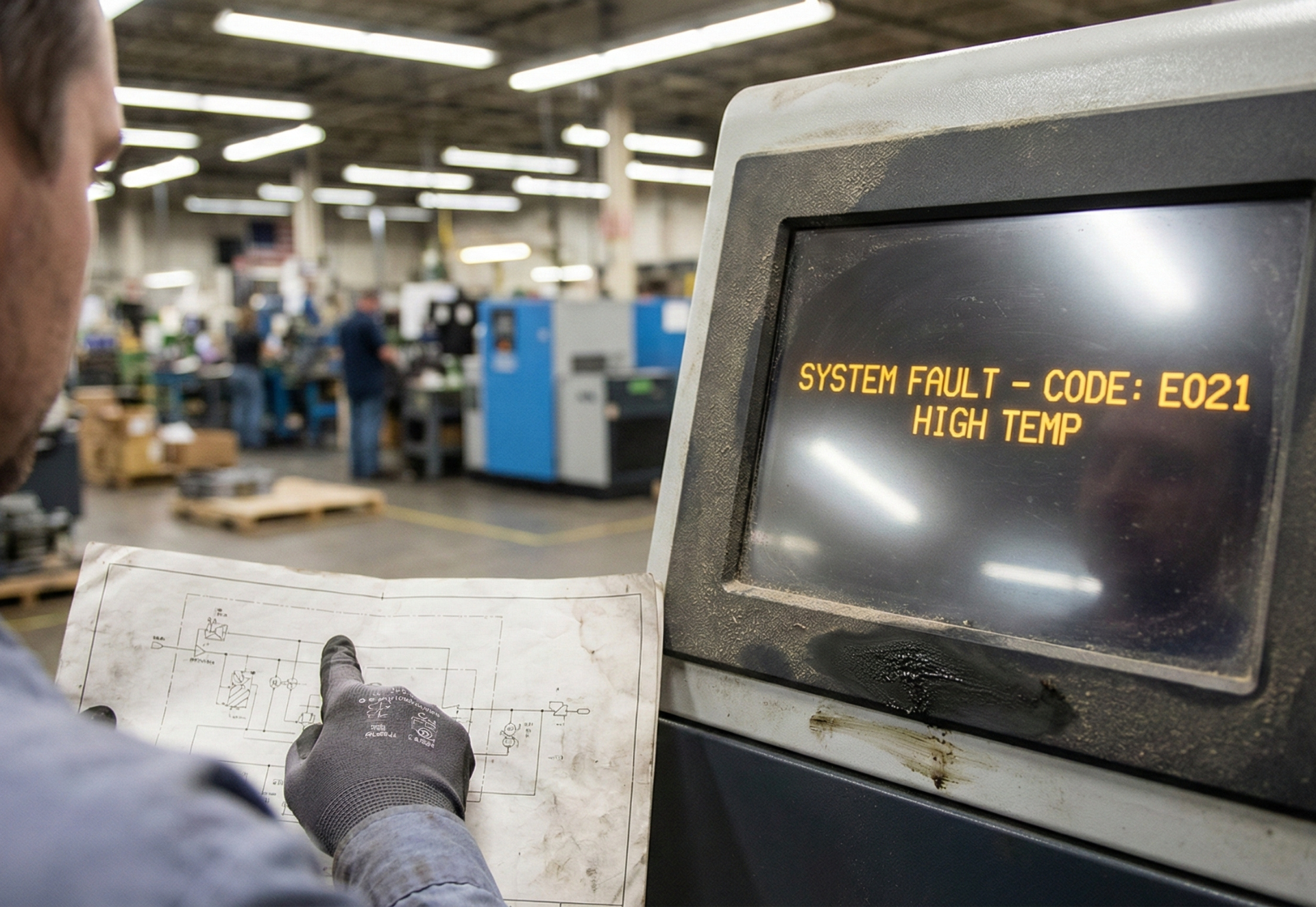
3. Overload, High Temperature, or Safety Shutdowns
Compressors protect themselves. When temperatures rise or motors strain, internal safeties shut them down to prevent catastrophic failure.
Reasons your compressor may refuse to start after a shutdown:
- Motor overload relay tripped
- High-temperature thermal switch activated
- Oil cooler or aftercooler clogged
- The ambient temperature toois high
- Low oil or wrong oil viscosity
In Texas heat, it’s common for compressors in poorly ventilated rooms to exceed safe operating temperatures.
Technical Insight: A high-temp shutdown will often lock out the compressor. You must identify the cause, not just reset the safety. Otherwise, the problem repeats and eventually damages the airend or motor.
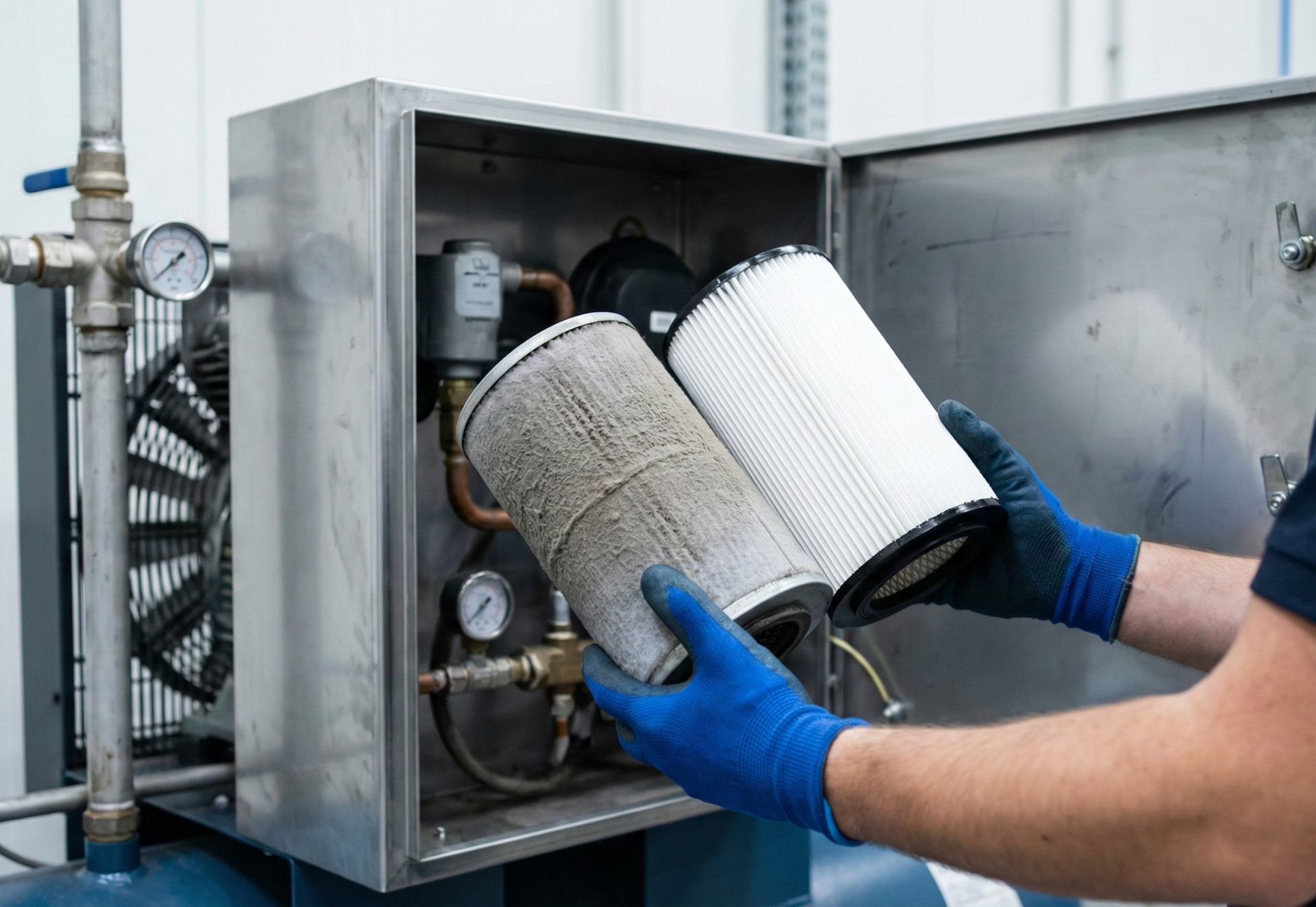
IAS technicians often see coolers clogged with lint, dust, or oil mist; a simple cleaning can save thousands in repairs.
4. Low Oil Level or Incorrect Oil Type (Rotary Screw Only)
Rotary screw compressors depend on oil for cooling, sealing, and lubrication. When oil levels drop below the sensor range, the compressor simply refuses to start.
Common reasons:
- Oil separator leak
- Poor maintenance intervals
- Wrong viscosity for Texas temperatures
- Sensor malfunction
Technical Insight: A rotary screw running without oil will destroy the airend in minutes, which is why manufacturers design them to lock out when levels are insufficient.
If the oil looks burned, foamy, or contaminated, stop running the machine and call IAS.
5. Faulty Starter, Contactor, or VFD Failure
Modern compressors often rely on:
- Magnetic starters
- Soft starters
- VFDs (Variable Frequency Drives)
If any of these components fail, the compressor will not start.
Symptoms include:
- Starter clicks but doesn’t engage
- VFD error codes
- Motor hums but doesn’t rotate
- No response when pressing Start
Technical Insight: A failing starter often indicates increased motor load, which may be caused by mechanical issues. Treat electrical problems as a symptom, not the final diagnosis.
IAS technicians carry the proper test equipment to identify whether the failure is electrical, mechanical, or both.
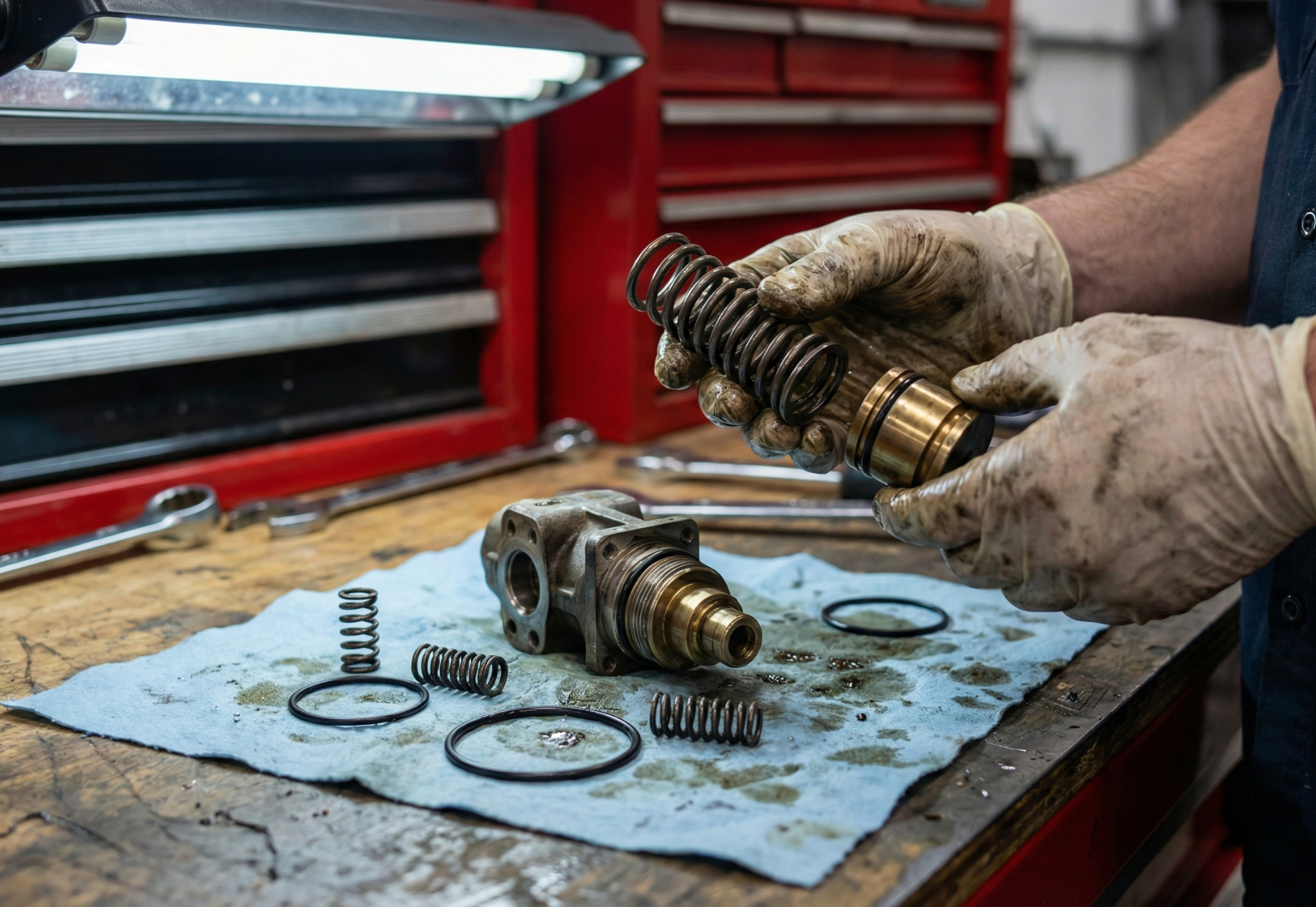
6. Unloader Valve Failure (A Common but Overlooked Cause)
When the unloader valve sticks, the compressor tries to start under full head pressure, which most motors can’t overcome.
Signs of this issue:
- The compressor tries to start but stalls
- Loud, strained humming sound
- Breaker trips on startup
- Pressure in the discharge line when there shouldn’t be
Technical Insight: Rotary screws must relieve discharge pressure during startup. A failed unloader creates an impossible load, causing the compressor to protect itself by not starting.
A simple cleaning or rebuild of the unloader valve often solves the problem.
7. Air Demand Exceeding System Capacity (Hidden Cause)
Sometimes the root issue isn’t the compressor; it’s everything downstream.
Examples:
- Additional production lines added
- New tools care onsuming higher CFM
- Inadequate receiver tank volume
- Leaks are forcing longer duty cycles
- Misconfigured controls are fighting each other
The compressor doesn’t start because it’s already overworked.
Technical Insight:
This is where IAS performs
compressed air audits and demand profiling. Many plants think they need a bigger compressor. In reality, they need a system redesign or leak mitigation strategy.
What You Shouldn’t Do When Your Compressor Won’t Start
Too many operators try this sequence:
- Reset the breaker
- Press Start
- Press Start harder
- Try again
- Pray
Doing this can cause:
- Motor burnout
- Starter weld
- Airend damage
- Safety system bypassing
- Worse failures than the original issue
If the compressor won’t start after basic checks, the safest move is to shut it down and call Industrial Air Services.
IAS technicians don’t guess.
We diagnose.
How IAS Diagnoses a Compressor That Won’t Turn On
At Industrial Air Systems (IAS), we employ a rigorous, engineering-focused methodology to troubleshoot and resolve every "no-start" air compressor case. Our systematic approach ensures rapid restoration of uptime and, more importantly, identifies the root cause to prevent costly recurring failures
1. Comprehensive Power Integrity Verification
A compressor's operation hinges on a stable, high-quality power supply. We begin by meticulously validating the entire electrical system:
- Voltage and Amperage: Measuring and confirming that the incoming voltage and operational amperage align precisely with the motor's specifications, identifying potential under- or over-voltage conditions that can trigger protective shutdowns.
- Phase Monitoring and Sequence: Ensuring correct three-phase power alignment. Incorrect phase rotation is a common cause of immediate shutdown and can lead to severe motor or airend damage.
- Breakers, Fuses, and Overload Relays: Thoroughly inspect all protective devices for tripping, wear, or incorrect sizing. A "nuisance trip" on a circuit breaker or overload relay often masks a deeper electrical or mechanical issue.
- Connections and Contactors: Checking the integrity and tightness of all electrical connections, terminals, and contactor surfaces to eliminate resistance, heat buildup, and intermittent power loss.
2. Detailed Thermal Condition Assessment
Thermal stress is a primary factor in compressor failures. Our team scrutinizes the system's ability to manage heat:
- Cooler and Heat Exchanger Efficiency: Inspecting air and oil coolers for blockage, fouling, or internal leaks that degrade heat transfer and cause high-temperature shutdowns.
- Ambient Operating Temperatures: Evaluating the compressor room ventilation to ensure ambient temperatures are within the manufacturer’s limits, as excessive heat severely reduces efficiency and component lifespan.
- Oil Quality and Condition: Analyzing the compressor oil for signs of degradation, contamination (water or particulate), or incorrect viscosity, which can compromise lubrication and lead to excessive component friction and heat.
3. In-Depth Control Logic and Alarm Interpretation
The compressor’s control system provides the clearest evidence of an underlying problem. We meticulously analyze the logic unit:
- PLC/Controller Codes and Messages: Reading and interpreting the exact fault codes, alarm messages, and shutdown sequences logged by the Programmable Logic Controller (PLC) or primary control panel.
- Pressure and Temperature Sensor Validation: Cross-referencing the readings from all critical sensors (discharge pressure, sump temperature, motor winding temperature) against expected values to detect sensor failures or real-time system anomalies.
- Historical Log Review: Examining the chronological log of shutdowns, pressure spikes, and maintenance events to establish a pattern of failure or identify a recent change in operating conditions.
4. Mechanical Load and Drivetrain Evaluation
The mechanical components are the heart of the compressor system. We assess the physical condition and alignment:
- Airend/Rotor Condition: Checking for signs of internal friction, binding, or excessive wear that could put undue strain on the motor and prevent startup.
- Couplings and Alignment: Inspecting the motor-to-airend coupling for damage or wear, and verifying perfect alignment. Misalignment is a frequent cause of motor overload and subsequent no-start conditions.
- Motor Rotation and Bearing Health: Manually jogging the motor to ensure free rotation (when safe to do so) and checking bearing noise/condition, as a seized or damaged motor will prevent startup.
- Unloader/Inlet Valve Performance: Verifying that the compressor is starting in an "unloaded" state. If the inlet valve fails to open/close correctly, the motor attempts to start against full system pressure, often leading to an immediate overload trip.
5. System Demand Measurement and Analysis
Understanding the external factors driving the compressor's workload is essential:
- Flow Meters and Usage Profiling: Utilizing flow meters to accurately measure air consumption and determine if the system demand is exceeding the compressor’s rated capacity, which can cause constant cycling and premature failure.
- Pressure Profiling: Monitoring the system pressure decay rate and identifying pressure spikes or dips that indicate unstable air delivery or significant demand fluctuations.
- Leak Assessment: Performing a comprehensive leak detection survey. Excessive system leaks force the compressor to run continuously, accelerating wear and increasing the chance of an overload shutdown.
6. Pinpoint Root Cause Identification
Our process culminates in isolating the root cause, not just treating the symptom. For example, a "High-Temperature Alarm" (the symptom) might be caused by a faulty cooling fan contactor (the immediate failure), which itself was triggered by a dirty heat exchanger (the underlying root cause). This holistic approach ensures:
- Restored Uptime: Getting the compressor back online in the shortest possible time.
- Prevented Recurrence: Eliminating the underlying issue that guarantees the same fault will not happen again.
When to Call Industrial Air Services
Call IAS immediately if:
- Breakers continue tripping
- The compressor smells like burning oil or insulation
- The unit hums but won’t rotate
- The Start button does nothing
- You see high-temp warnings
- You recently added new production lines
- The compressor restarts multiple times per shift
- You suspect an electrical failure
IAS serves Texas facilities with a boots-on-the-ground approach:
Real technicians. Real troubleshooting. Real long-term solutions.
We minimize downtime and eliminate guesswork, because every minute your compressor is down, production slows, labor idles, and costs climb.
3 Frequently Asked Questions
1. How to fix an air compressor not turning on?
When an air compressor won’t turn on, the first step is to check the basics:
- Confirm power supply and breaker status
- Check for tripped overloads
- Inspect oil level (for rotary screw units)
- Ensure adequate ventilation and temperature
- Look for obvious wiring damage
However, if these don’t fix it, the issue is likely deeper. Common hidden causes include:
- Faulty starter or contactor
- Bad pressure switch or sensor
- Stuck unloader valve
- High-temperature safety shutdown
- Control logic errors
- Motor or VFD failure
These require diagnostic tools and trained technicians, not guesswork.
IAS Advantage: Industrial Air Services offers rapid on-site troubleshooting, electrical diagnostics, and mechanical repair for all major compressor brands. Our technicians identify the true root cause, not just the symptom, and restore your system safely without risking further damage. When your compressor won’t start, IAS is the fastest path back to uptime.
2. Does a compressor have a reset button?
Yes, most air compressors have a reset button, typically tied to motor overload or high-temperature protection. When the compressor overheats or draws excessive current, the safety circuit trips, and the reset must be pressed to restore operation.
Where the reset button is located depends on the model, but it’s usually found:
- Near the motor
- On the starter panel
- On the control interface
- Behind an access panel for rotary screw compressors
But here’s the caution: If your compressor keeps tripping and needing a reset, that’s not normal. It’s a symptom of a deeper issue, such as:
- Rising discharge temperature
- Failing motor windings
- Restricted airflow
- Low or degraded oil
- Overloaded duty cycle
- Failing unloader valve
Constant resetting can cause permanent equipment damage.
IAS Advantage: IAS technicians diagnose why your compressor is tripping in the first place. We address overheating, lubrication issues, airflow restrictions, and electrical faults, and provide preventive maintenance options to stop the problem from coming back.
3. Why won’t my compressor restart?
If your compressor runs once but won’t restart after cycling, the most common causes include:
- High-temperature lockout (Texas heat is a major contributor)
- Pressure switch failure
- Unloader valve stuck closed, preventing a no-load restart
- Motor overload
- Short cycling from leaks or poor system design
- Controls preventing restart due to safety thresholds
- Insufficient cooling time between cycles
Restart issues often reveal an imbalance between system demand and compressor capability, or a mechanical component beginning to fail.
IAS Advantage: Industrial Air Services performs full restart diagnostics, including temperature profiling, load analysis, leak testing, and control system evaluation. We identify whether the issue stems from the compressor, the downstream system, or the electrical supply. IAS can also upgrade controls, repair unloaders, or redesign your system for stable operation, ensuring reliable restarts and long-term uptime.
Get Your Compressor Back Online: Call Industrial Air Services Today
A compressor that won’t turn on isn’t just an inconvenience; it’s a production threat. IAS brings decades of hands-on expertise, advanced diagnostics, and real-world problem-solving to keep your plant running strong.
If you want:
- Immediate troubleshooting
- Accurate root-cause diagnosis
- Texas-trained technicians
- Long-term system reliability
- Reduced downtime and maintenance costs
Then it’s time to contact IAS.
Your uptime is our priority. Your efficiency is our mission.
Reach out to Industrial Air Services today and get your compressor running the way it should.
External Authority References (for technical credibility)U.S. Department of Energy – Compressed Air Systems
https://www.energy.gov/eere/amo/compressed-air- Compressed Air & Gas Institute – Compressor Troubleshooting Guides
https://www.cagi.org - Kaeser Knowledge Center – Compressor Startup Issues
https://us.kaeser.com/