Compressed Air Audit Services: How IAS Reduces Energy Costs and Improves System Reliability
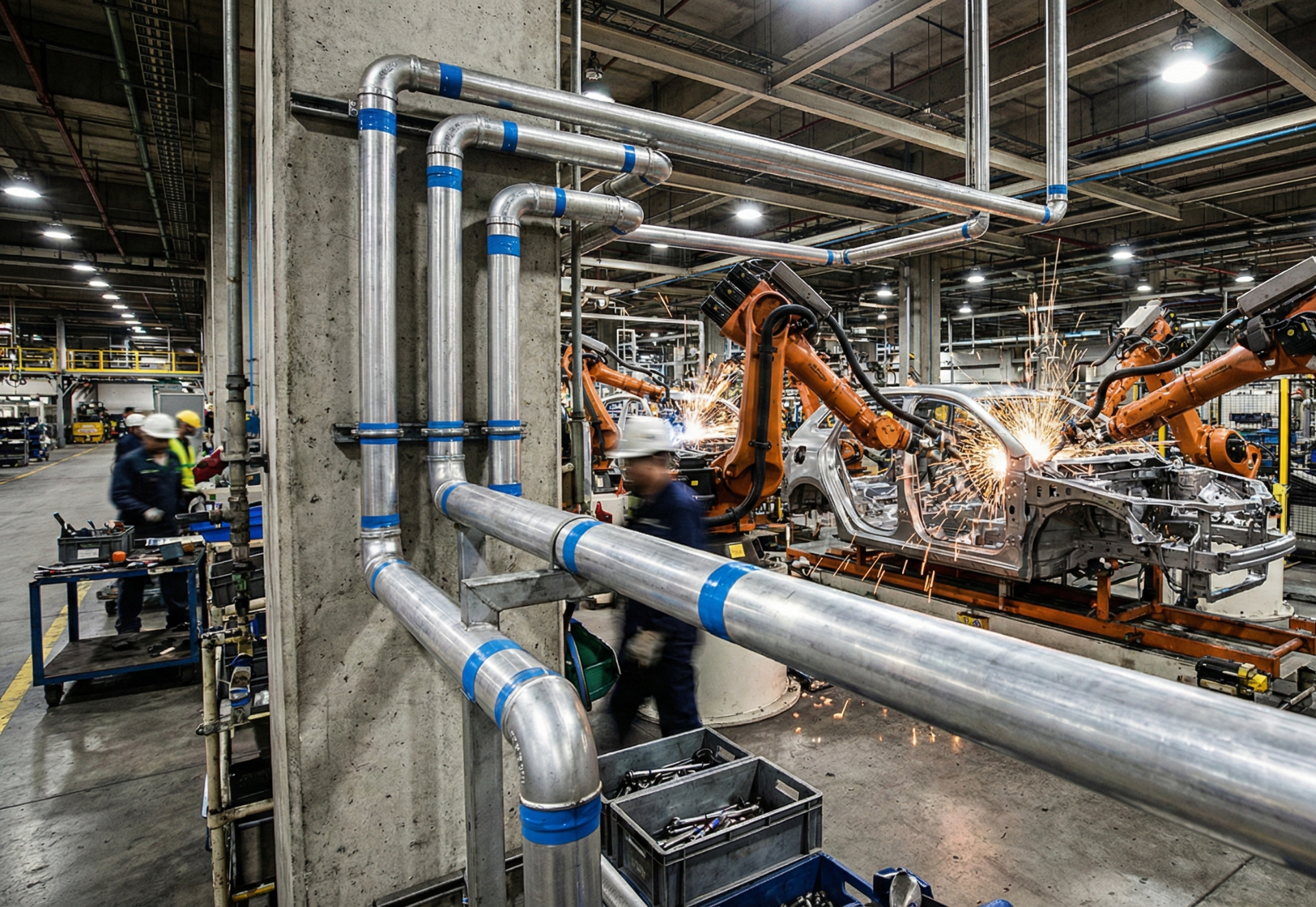
In the competitive, high-stakes manufacturing and production environment of Texas, where profitability hinges on maximum uptime and efficient energy consumption, compressed air is far more than a simple utility, it is the indispensable, high-cost backbone of your critical operations. However, beneath this necessity lies a costly, often invisible inefficiency:
The Hard Truth: Most industrial and manufacturing facilities are unknowingly wasting a staggering 20–30% of their compressed air output, energy, and resources.
This waste translates directly into thousands of dollars in avoidable operating costs every single month, silently draining your bottom line.
At
Industrial Air Services (IAS), our decades of experience in the field have revealed common, yet highly damaging, operational oversights. We’ve entered facilities and immediately identified systems running two compressors under load when a properly optimized system would only require one. We’ve pinpointed small, high-pressure leaks that, over the course of a year, were costing the equivalent of a substantial capital equipment investment. Furthermore, we consistently find severe pressure drops within the distribution network that force operators to unnecessarily increase the compressor discharge pressure, leading to the damaging cycle of overworking and prematurely wearing out expensive equipment. None of these inefficiencies was malicious or intentional, but they were all entirely preventable with the right data and expertise.
That’s precisely where a professional, in-depth
compressed air audit service from IAS becomes not just beneficial, but essential.
A true, engineering-based compressed air audit provides more than just a checklist. It delivers the actionable
numbers, the deep
insight, and the clear, prioritized
roadmap you need to:
- Stop the Bleeding: Immediately identify and quantify system inefficiencies, starting with leaks and artificial demand.
- Optimize Performance: Fine-tune your control strategies, storage capacity, and compressor sequencing to match supply precisely with your fluctuating demand profile.
- Prevent Catastrophic Downtime: Identify hidden issues like inadequate cooling, high moisture content, or pending equipment failures before they cause a complete production halt.
- Maximize Value: Ensure you are extracting every possible dollar of efficient production value from your existing capital investment.
Our approach is distinctly different from a casual walk-through inspection or a basic component check. The IAS Compressed Air Audit is a comprehensive,
data-driven engineering study built specifically for plant managers and operators who demand measurable results, not mere assumptions or guesses.
We deploy state-of-the-art data logging equipment to meticulously monitor critical system variables, including pressure, flow (CFM), power consumption (kW), temperature, and dew point, over a sustained period (typically 7–14 days). This process captures a complete, unbiased profile of your system's operational cycles, peak demands, idle times, and overall efficiency, providing the factual basis for every recommendation we make.
What Are Compressed Air Audit Services?
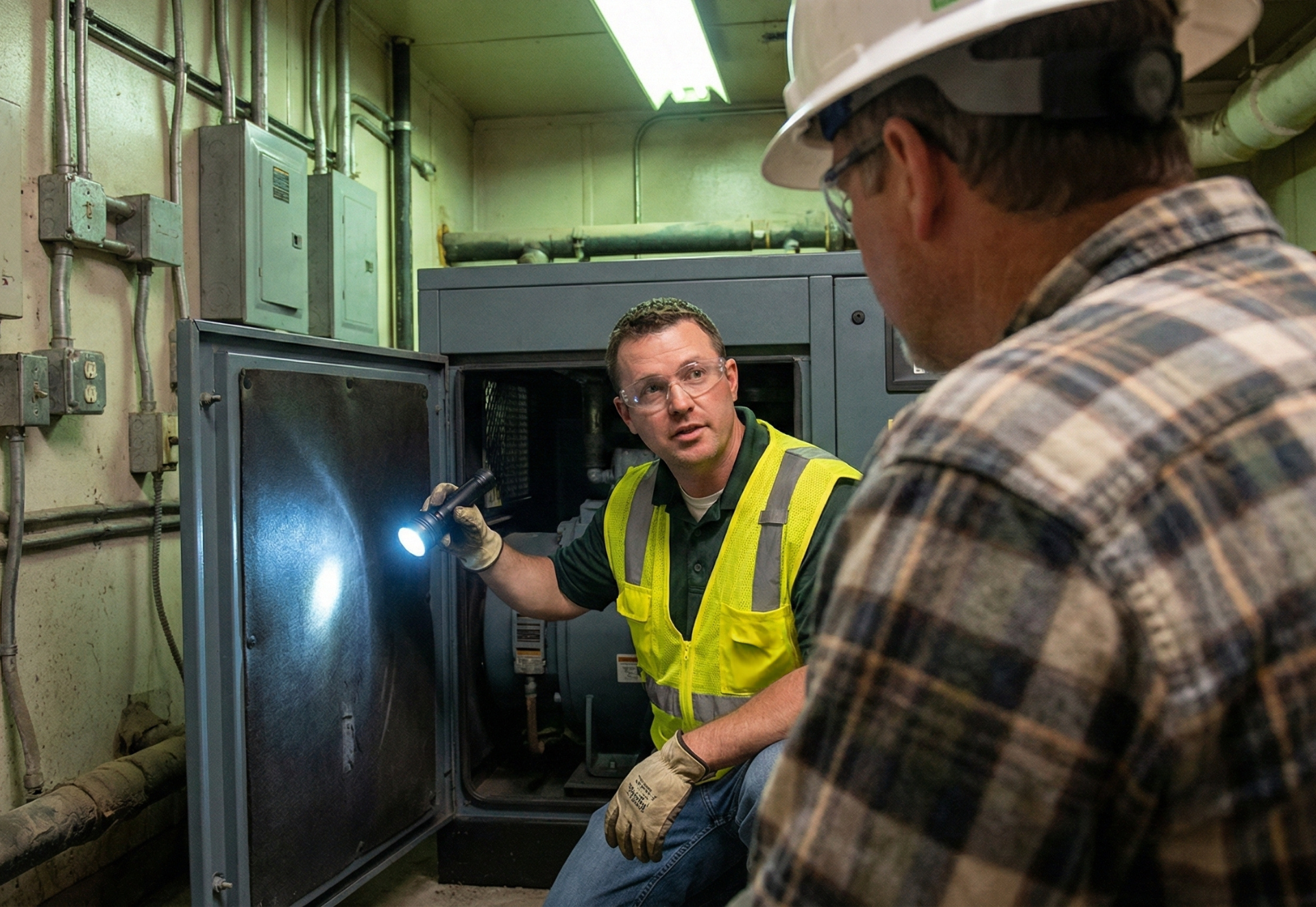
Think of a compressed air audit as a full diagnostic scan of your entire air system, from the compressor room to the far end of the distribution piping. It measures not just how much air you’re producing, but how much you’re wasting, where you’re losing efficiency, and what improvements would save you the most money and downtime.
A complete IAS compressed air audit includes:
- Flow and pressure data logging
- Leak detection and quantification
- System curve analysis
- Pressure drop evaluation
- Controls and sequencing assessment
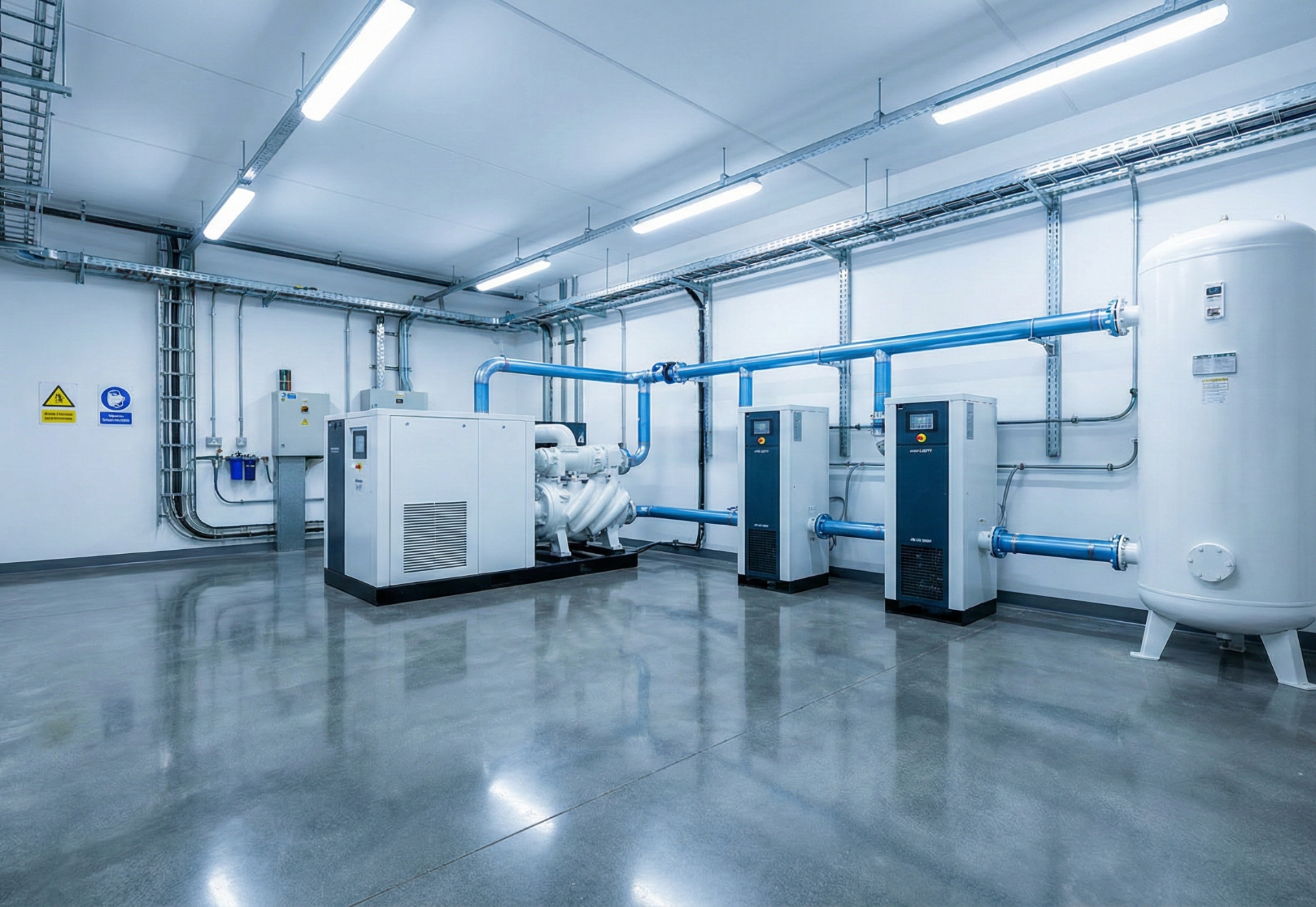
- Storage and distribution mapping
- Energy consumption modeling
- Compressor performance benchmarking
- ROI projections for recommended improvements
In short: It tells you what’s happening, why it’s happening, and what fixing it will save you.
Why Compressed Air Systems Fail Without Warning
Unlike motors or bearings that squeal when they’re about to fail, compressed air systems break down quietly. Little inefficiencies build up over time:
- A small leak → higher demand
- Higher demand → longer duty cycles
- Longer cycles → higher temperature
- Higher temperature → premature failure
And before you know it, a compressor that “seemed fine last month” suddenly trips on high temperature or fails outright.
Most of these failures begin with problems that an audit would have uncovered long before they became expensive.
Top 5 Hidden Issues That IAS Compressed Air Audit Services Uncover
1. Air Leaks That Bleed Money 24/7
Leaks are the #1 source of compressed air waste in Texas facilities.
Most plants underestimate them, sometimes by thousands of dollars per year.
According to the U.S. Department of Energy, a single 1/8-inch leak wastes over 1,300 kWh annually.
IAS audits pinpoint every leak with ultrasonic equipment, quantify the CFM loss, and calculate the energy cost so you know exactly what you’re paying for.
2. Incorrect Compressor Controls and Sequencing
When multiple compressors aren’t sequenced correctly, they fight each other.
One loads while another unloads, then both cycle unnecessarily.
IAS commonly finds issues like:
- Outdated control logic
- VFD improperly tuned
- Load/unload settings are misaligned
- Compressors sized incorrectly for actual demand
Fixing controls typically provides immediate savings, no equipment purchase required.
3. Pressure Drops That Force Operators to “Run Higher Than Necessary.”
Pressure drops often masquerade as a capacity problem.
Symptoms include:
- Tools underperforming
- End-of-line equipment is starving for air
- Operators demanding higher PSI
Raising system pressure is expensive; every 2 psi increases energy use by 1%.
IAS audits show exactly where pressure is being lost:
- Undersized piping
- Restrictive fittings
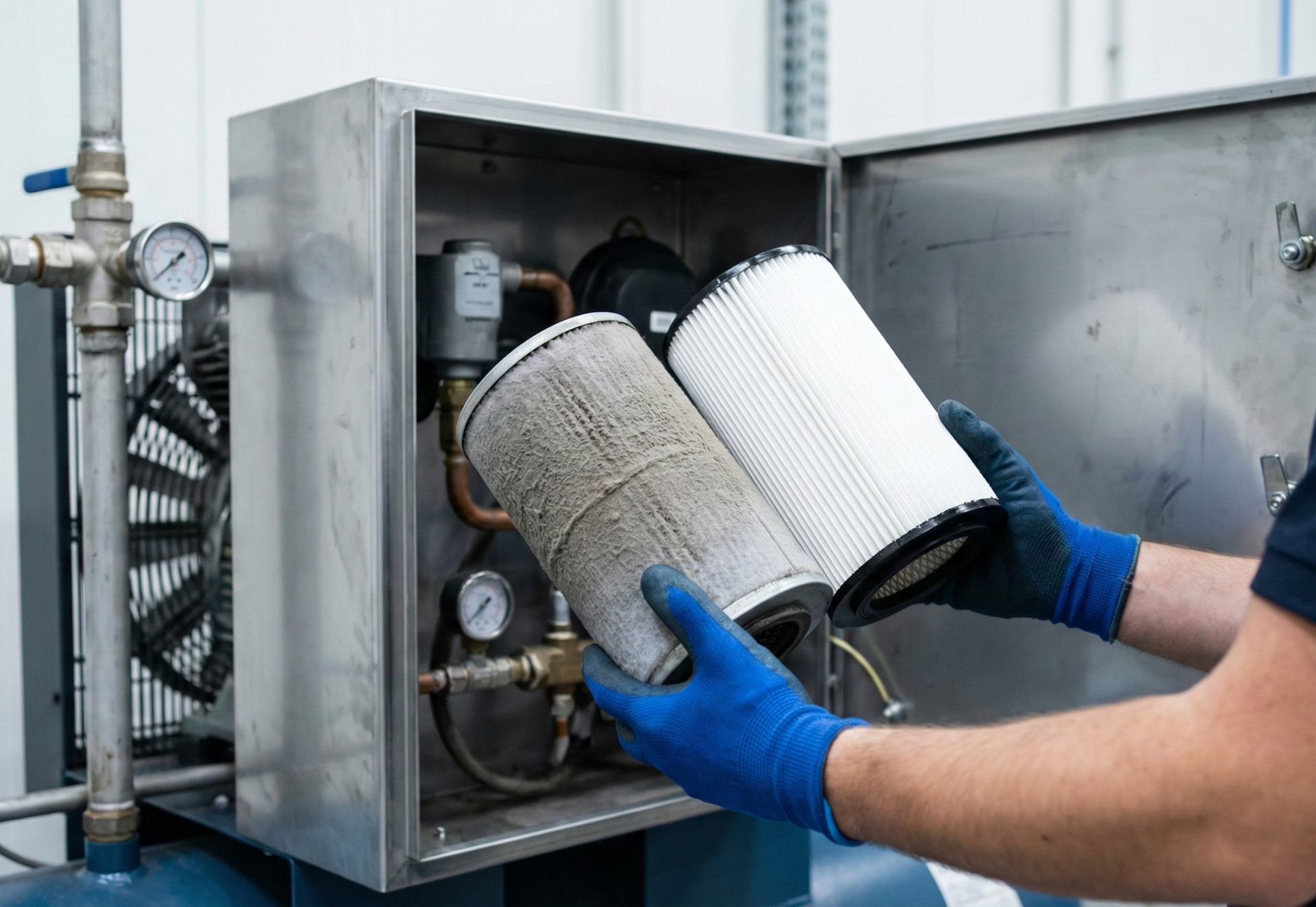
- Dirty filters
- Bad layout flow direction
When operators see the pressure map, they finally understand where the bottlenecks are and how easy they are to fix.
4. Oversized or Undersized Compressor System
Some plants run compressors far too large for their real demand.
Others added equipment over the years, but never upgraded their air system.
IAS audits include a demand profile that shows:
- Peak usage
- Off-peak usage
- Idle waste
- Average CFM requirement
- Required storage capacity
The result? You get a system designed for what you actually need, not what someone assumed years ago.
5. High Energy Consumption That Goes Unnoticed
Compressed air is one of the most expensive utilities in manufacturing.
Most plants don’t know how much electricity they’re wasting.
IAS identifies:
- Peak load spikes
- Low-efficiency motors
- High-temperature runtimes
- Constant cycling from leaks
- Inefficient dryers and filtration
Energy-saving upgrades often pay for themselves in less than a year.
What Makes IAS Compressed Air Audit Services Different
In today's industrial landscape, "audit" has become a common term, and the market is saturated with companies offering what they brand as "assessments." However, a significant portion of these offerings is, at their core, nothing more than thinly veiled sales tools—pro forma inspections designed to justify the immediate purchase of new equipment from the same provider. These are often generic, lacking deep engineering insight, and rarely provide a holistic view of a system's true efficiency and reliability challenges.
At Industrial Air Solutions (IAS), our commitment is to genuine, unbiased engineering and proven results. Our compressed air audits are fundamentally different because they are built not as a pathway to a sale, but as a robust diagnostic tool for systemic improvement.
1. Operator-Focused, Not Sales-Focused
Our technicians aren’t here to push new equipment.
We’re here to solve problems.
Many improvements are required:
- Control adjustments
- Leak repairs
- Filtration upgrades
- Layout corrections
Not new compressors.
2. Data-Driven, Not Opinion-Driven
Every recommendation is backed by:
- Real flow measurements
- Real pressure logs
- Actual energy use
- Verified leak quantification
- ROI projections
You see the numbers for yourself, not an estimate.
3. Texas-Tested Experience
IAS has worked inside manufacturing plants, fabrication shops, chemical facilities, and distribution centers across Texas.
We know:
- Texas heat
- Texas humidity
- Texas dust
- Texas workload
- Texas production cycles
Your system is evaluated by experts who understand real-world conditions, not lab models.
What Happens During an IAS Compressed Air Audit
Here’s the process broken down operator-to-operator, detailing how Industrial Air Solutions (IAS) meticulously analyzes your compressed air system to uncover hidden inefficiencies, reduce energy costs, and dramatically improve overall system reliability. Our comprehensive audit is more than just a leak check; it's a holistic assessment designed to turn your compressed air system into a finely-tuned, cost-effective utility.
Our Auditing Process Includes:
Step 1: Walkthrough & Interview
We start by learning:
- Your production needs
- Problem areas
- Current downtime issues
- Air quality requirements
- Pressure expectations
- Existing maintenance practices
This ensures the audit reflects your operation, not a generic template.
Step 2: Install Measurement Equipment
We place:
- Flow meters
- Pressure sensors
- Temperature probes
- Data loggers
These run for several days to capture everything, shift changes, machine startups, shutdowns, and unexpected demand spikes.
Step 3: Leak Detection & Quantification
IAS technicians use ultrasonic leak detection to locate even the smallest leaks in loud environments.
Every leak is:
- Tagged
- Documented
- Measured
- Costed
- Prioritized
Most facilities are shocked at how much they’re losing.
Step 4: System Modeling & Analysis
We evaluate:
- Compressor duty cycles
- Storage capacity
- Pressure drops
- Load profiles
- Energy consumption
- Piping design
This is where most inefficiencies reveal themselves.
Step 5: Detailed Report With ROI Roadmap
Your final audit includes:
- All findings
- Root-cause explanations
- Energy savings opportunities
- Leak cost breakdown
- Optimization recommendations
- Projected payback periods
This is a practical, field-ready plan, not a presentation for a conference room.

The Tangible Return on Investment (ROI) of IAS Compressed Air Audit Services
Investing in a comprehensive Compressed Air Audit from Industrial Air Solutions (IAS) is not just a cost; it's a strategic investment with a rapid and substantial return. Most Texas facilities that partner with us report a complete recovery of their initial audit cost in a remarkably short window, typically
30 to 90 days.
This exceptional ROI is not based on conjecture; it's rooted in a cascade of verifiable, operational, and financial benefits that manifest immediately following the implementation of our recommendations.
Where the ROI Originates: A Detailed Breakdown of Benefits
Our audits identify inefficiencies and provide actionable steps that translate directly into bottom-line savings and system improvements:
Category
Detailed Benefit
Impact on Operations and Finances
Energy & Utilities
Lower Electricity Bills
Systematically identifying and fixing leaks, optimizing pressure settings, and reducing artificial demand drastically cuts down the kilowatt-hours (kWh) required to run your air compression system. This is often the largest source of immediate savings.
Reduced Compressor Runtime
By optimizing the system and minimizing wasted air, compressors operate less frequently and spend more time in efficient 'unload' cycles. This reduces total energy consumption and the stress on internal components.
Equipment & Maintenance
Extended Compressor Lifespan
Less runtime, more stable operating conditions, and optimized system controls reduce wear and tear on the most expensive components of your compressed air system, significantly postponing the need for premature replacements.
Less Unplanned Downtime
Audits preemptively identify potential failure points—such as undersized components, cooling issues, or excessive system pressure—allowing for preventative maintenance rather than costly, disruptive, and production-halting emergency repairs.
Ability to Defer Expensive Equipment Upgrades
Often, facilities believe they need to purchase a new, larger compressor to meet perceived demand. An IAS audit frequently reveals that the existing system is more than capable of meeting demand once leaks and inefficiencies are addressed, allowing for a substantial capital expenditure deferral.
Production & Quality
Improved Air Quality
Recommendations may include optimizing drying and filtration to ensure air meets the specific quality standards required for sensitive processes (e.g., food and beverage, electronics, pharmaceuticals), reducing product contamination and waste.
Pressure Stability Across Production Lines
Addressing pressure drops and ensuring a consistent, stable supply of air at the necessary pressure to every point of use eliminates production slowdowns, inconsistent process results, and machinery malfunctions caused by low pressure.
This isn't theoretical; these substantial savings and operational improvements show up on real utility bills and production logs, providing indisputable evidence of the value delivered by IAS Compressed Air Audit Services.
Stop Air Waste? Schedule Your IAS Compressed Air Audit Today.
Your compressed air system doesn’t need to be a silent profit drain.
With IAS, you get:
✔ Texas-trained experts
✔ Engineering-grade data
✔ Zero guesswork
✔ Practical solutions
✔ Proven ROI
✔ Long-term reliability
Whether you’re chasing lower energy bills, better performance, or fewer breakdowns, a compressed air audit is the smartest investment you can make today.
Industrial Air Services: The Texas Partner That Keeps Your Air System Honest.
Contact IAS today and get a system built for performance, reliability, and efficiency.
3 FAQs
1. How long does an IAS compressed air audit take?
Most audits run 3–7 days to capture full production cycles. Large facilities may require more time.
2. Will the audit disrupt operations?
No. All monitoring equipment mounts externally. Production continues normally.
3. Do audits always require equipment replacement?
Not at IAS. Many improvements involve leak repair, control optimization, and layout adjustments — not new compressors.
External Authority References
Used to support technical accuracy:
- U.S. Department of Energy – Compressed Air Efficiency
https://www.energy.gov/eere/amo/compressed-air - Compressed Air & Gas Institute – System Best Practices
https://www.cagi.org - Atlas Copco Knowledge Center – Compressed Air Audits
https://www.atlascopco.com/