Air Audit 101: The Proven Way to Cut Energy Waste and Boost Compressed Air Efficiency
In Texas, folks know two things for sure:
A good compressor will make you money… and a leaking compressed air system will burn through your budget faster than a summer wildfire.
Most facilities don’t realize how much compressed air they’re losing every single day. Some plants think their compressors are too small, others assume they need a brand-new unit, and many accept high energy bills as “just the cost of doing business.”
But here’s the truth every operator needs to hear:
Your compressor is rarely the real problem. The real problem is the waste you can’t see.
That’s why an air audit is one of the smartest, most ROI-positive decisions you can make for your facility. Whether you’re running a small workshop or a full production line, an air audit shows you exactly where your compressed air is going, and how to bring that cost back under control.
At IAS, we’ve conducted air audits across Texas plants, both large and small. And we’ve seen everything:
Leaking pipes that hissed like rattlesnakes… filters that clogged so bad they choked the compressor… and demand profiles that caused unnecessary shutdowns in the middle of peak production.
This guide explains what an air audit is, why it matters, and how it can reduce energy waste without compromising performance or uptime.

What Is an Air Audit? (And Why Most Operators Wait Too Long to Get One)
An air audit is a technical assessment that measures how efficiently your compressed air system is running. It goes far deeper than putting a hand around a pipe and guessing where leaks might be.
A professional audit looks at:
- System pressure and flow demands
- Energy consumption vs. actual demand
- Leak load and air loss locations
- Compressor control settings
- Distribution piping issues
- Air quality, filtration, dryer performance
- Storage and pressure drops
- Cycle profiles during peak and off-peak hours
Think of it like an MRI for your compressed air system. You’re not just spotting the symptoms, you’re diagnosing the root cause.
According to the U.S. Department of Energy,
compressed air accounts for up to 10% of industrial electricity usage, and
leaks alone can waste 20–30% of a system’s output.
Source: https://www.energy.gov/eere/amo/compressed-air
Translation for operators: If your electricity bill feels too big, there’s a good chance your air system is leaking dollars.
Why Air Audits Matter: The Real Cost of Running “Blind”
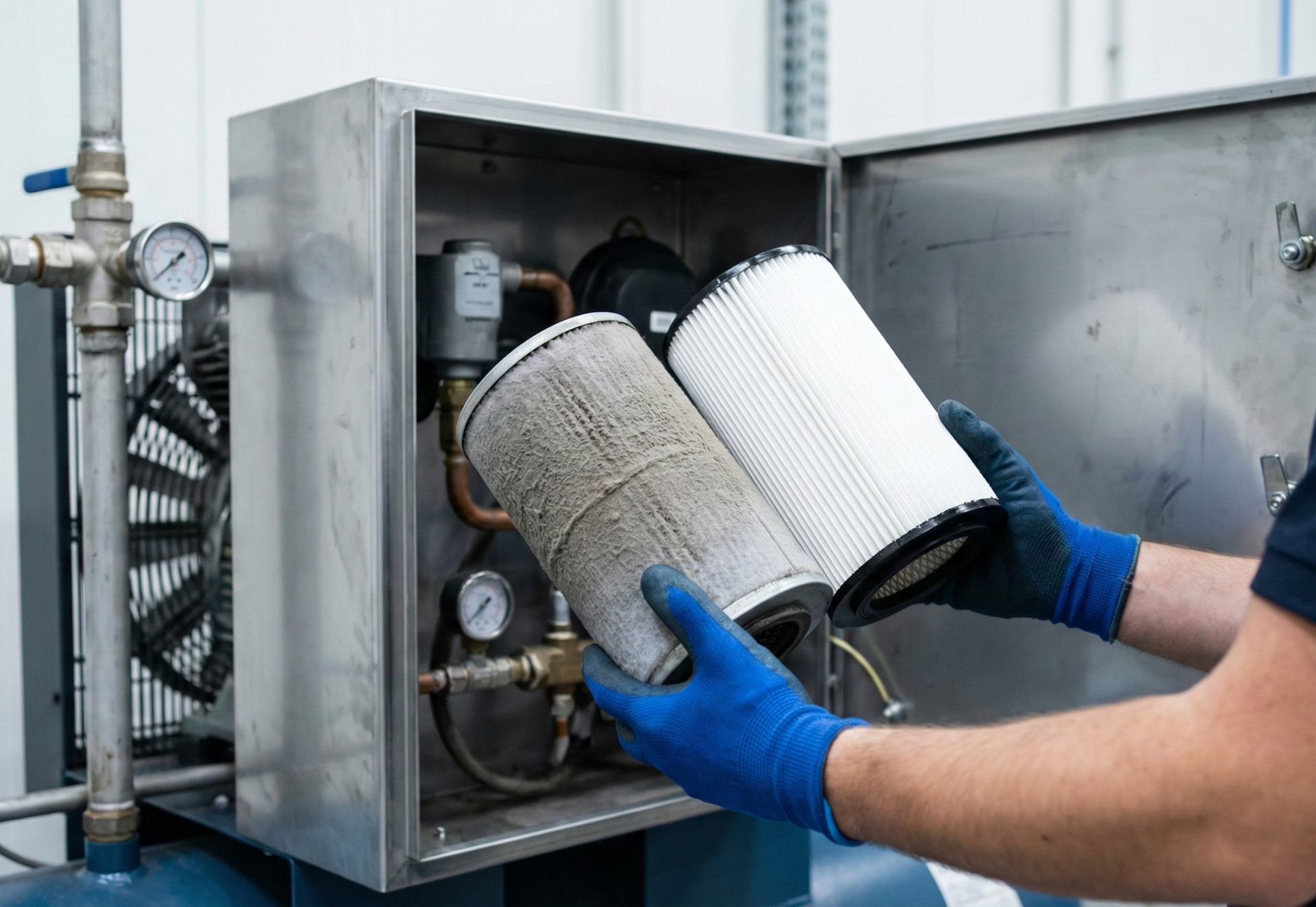
A compressed air system doesn't experience catastrophic failure overnight; rather, it succumbs to a slow, costly decline in efficiency. This insidious degradation is often invisible without specialized tools, leading businesses to unwittingly waste vast amounts of energy. Every point of friction, be it a pinhole leak, a convoluted pipe path, a perpetually open condensate drain, or a dirt-clogged filter, acts as a bottleneck, creating resistance within the system.
This increased resistance forces the compressor to work against higher back-pressure. The motor draws more current, cycle times extend, and the system struggles to maintain the required pressure and flow. This is the moment facility managers typically observe the most alarming symptom: a sharp, inexplicable surge in the electricity bill, often coupled with the necessity of running a second, trim compressor to handle what was previously a single-unit load.
Suddenly, the question arises:
"Why are we running two compressors just to support the same load we handled easily with one six months ago?"
The answer, overwhelmingly, is not the wholesale failure of capital equipment. It is
inefficiency, a systemic breakdown in the delivery of compressed air energy, turning electricity into wasted heat and noise instead of useful work. Operating a compressed air system "blind" is akin to driving a car with a leak in the gas tank and perpetually dragging the brakes. The resource is constantly being consumed, but the output is drastically diminished.
An air audit is not just a diagnostic tool; it is a proven, proactive strategy that transforms a major operating expense into a manageable, highly optimized utility.
Here are the four biggest and most costly problems an air audit decisively solves:
1. Air Leaks: The Silent Profit Killers
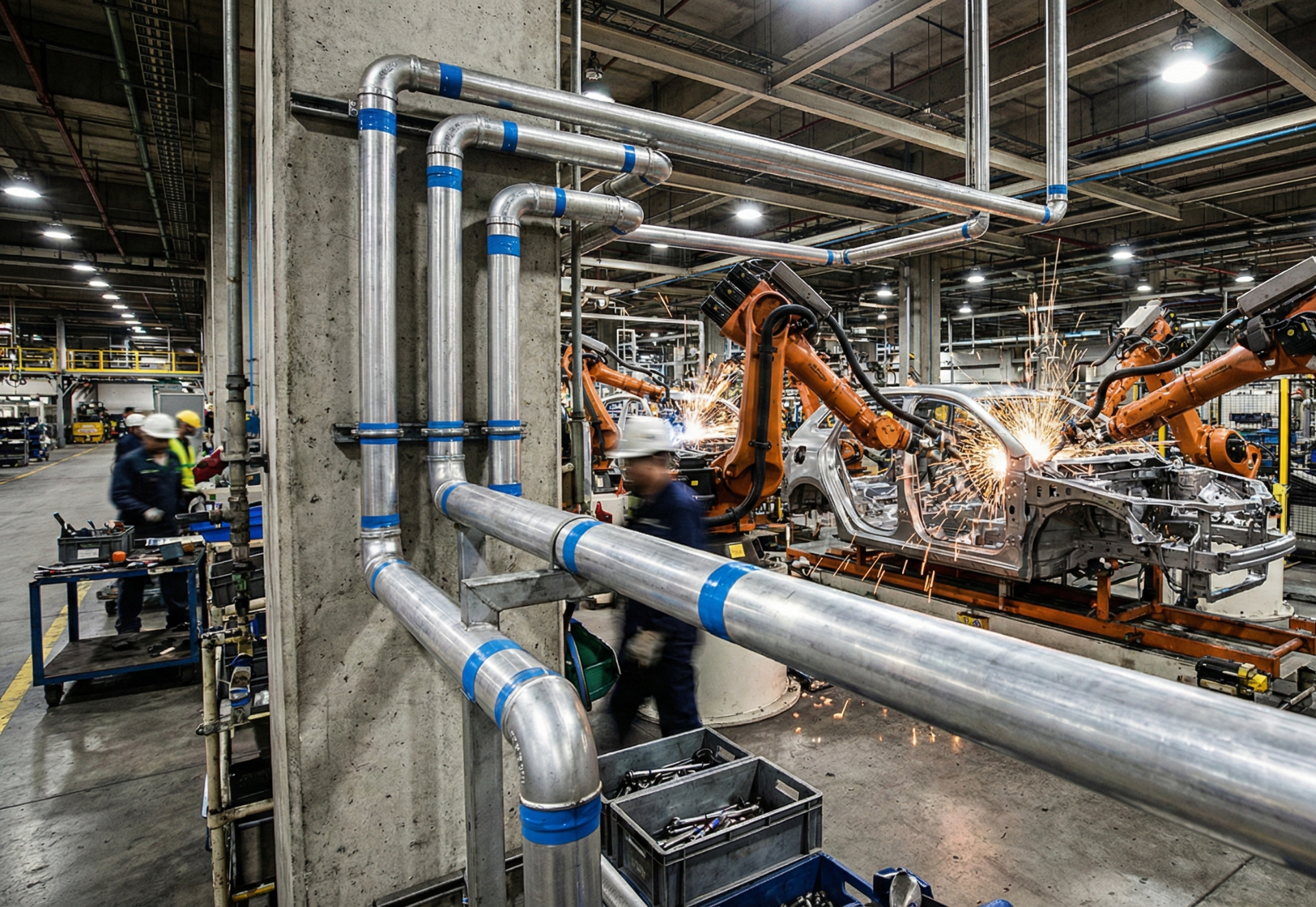
Air leaks are the No. 1 source of compressed air waste.
A single 1/8" leak at 100 psi wastes over $1,200 per year in electricity, according to the Compressed Air & Gas Institute.
Multiply that by the number of fittings, valves, unions, and hoses in a plant… and you see the problem.
You can’t fix what you can’t hear.
An audit reveals every leak, even the ones you’d never find manually.
2. Incorrect Pressure Settings & Poor Controls
Many plants run compressors at higher pressure than they actually need, just to “be safe.”
Here’s the technical truth: Every 2 psi of unnecessary pressure increases energy consumption by about 1%.
An audit identifies:
- Whether your compressor is oversized
- Real-time pressure drops
- Inefficient control modes
- Misconfigured VFDs (variable frequency drives)
In most cases, you don’t need more pressure; you need better optimization.
3. Undersized Piping & Bad Distribution Layout
Texas facilities built 10, 20, or even 30 years ago weren’t designed for today’s airflow demands.
When piping chokes airflow, it forces compressors to overwork.
An audit shows exactly where air is getting stuck, and how to widen the bottleneck.
4. Running Extra Compressors Unnecessarily
One of the biggest wins we see:
Plants running multiple compressors 24/7 when only one is needed.
A true audit doesn’t guess. It reads flow data, demand curves, and load profiles to calculate your real capacity requirements.
Cutting just one unnecessary compressor can save thousands per year.
What Happens During an IAS Air Audit
Every compressed air system provider offers a "check-up," but it is crucial to understand that a genuine, value-driven air audit is far more than a cursory inspection or a quick walk-through of the facility. At Industrial Air Solutions (IAS), an air audit is a
structured, rigorous, and entirely data-driven engineering assessment designed to systematically identify inefficiencies, quantify energy waste, and provide a clear, actionable roadmap for system optimization. It is the proven methodology for transforming an often-overlooked utility into a high-performing, cost-saving asset.
This process is not based on guesswork or subjective observations. It is a comprehensive, scientific investigation into the health and performance of your entire compressed air infrastructure, from the compressor intake to the point of end-use.
Here is IAS’s operator-to-operator breakdown of what this intensive process involves:
Step 1: Baseline Measurement
We install calibrated flow meters, data loggers, and pressure sensors across strategic points in the system. This gives us:
- Peak demand
- Off-peak cycles
- Pressure fluctuations
- Compressor duty cycles
- Storage shortfalls
No guessing. No assumptions. Just hard data.
Step 2: Leak Quantification & Location
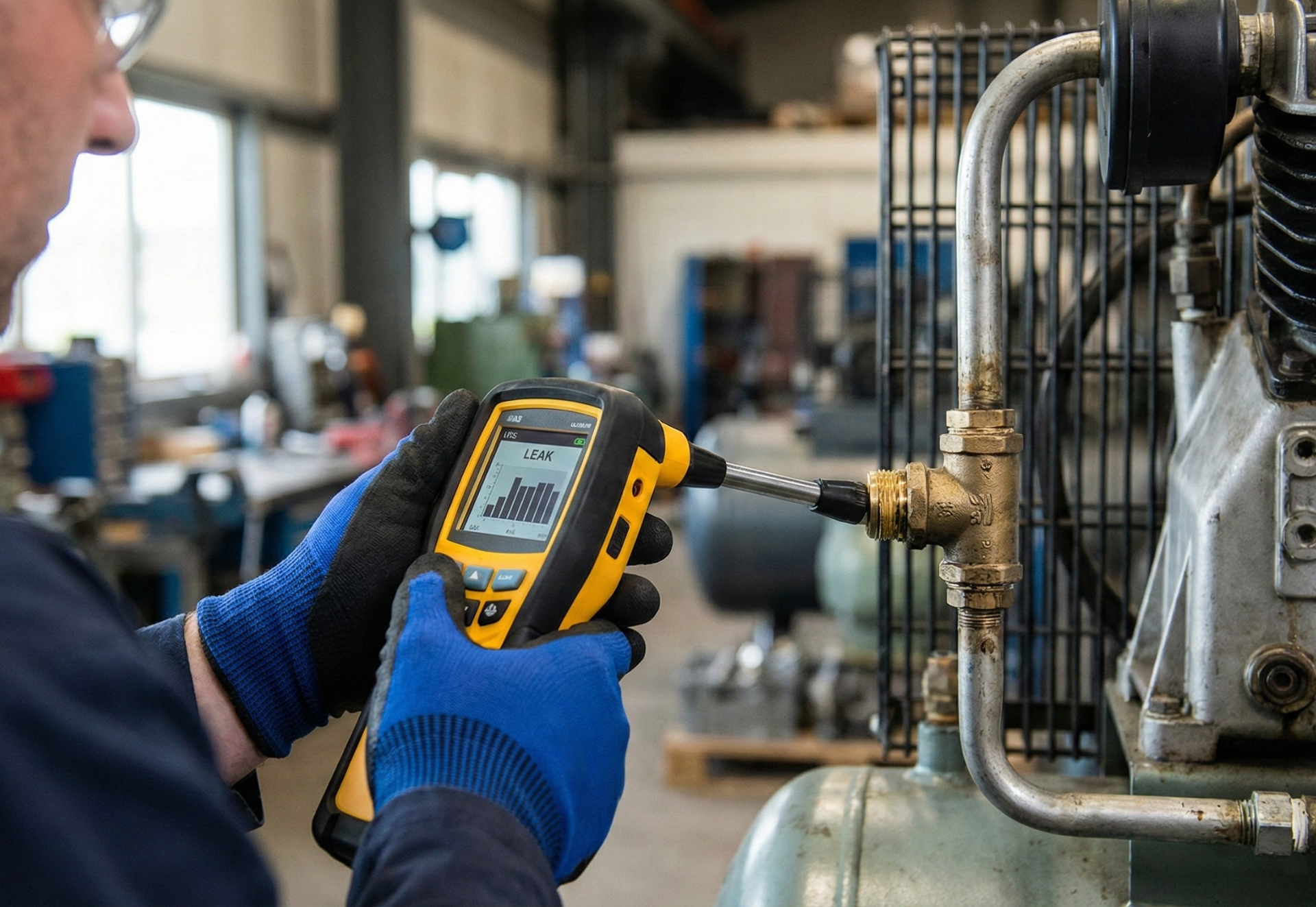
We use ultrasonic leak detection tools capable of pinpointing leaks even in loud production environments.
Every leak is:
- Tagged
- Quantified (CFM loss)
- Costed (annual energy waste)
- Prioritized for repair
Operators love this part; it’s where the budget savings finally show up on paper.
Step 3: Efficiency & Control Analysis
We analyze:
- Compressor control modes
- Load/unload cycles
- VFD settings
- Dryer and filter pressure drops
- Piping layout
This is where we typically uncover the “invisible” issues that cost plants the most.
Step 4: System Optimization Plan
We deliver a full engineering report that shows:
- What’s wasting air
- What it costs in dollars
- What to fix first
- Expected ROI
- Equipment and layout recommendations
Operators appreciate that we speak their language: Straight to the point, no fluff, and always backed by real numbers.

The ROI of an Air Audit (Why Facilities Never Regret It)
Most plants recover the cost of an audit in weeks, not months.
Here’s where the savings show up:
- Lower electricity bills
- Reduced compressor runtime
- Longer compressor lifespan
- Fewer emergency shutdowns
- Lower maintenance cost
- Stabilized system pressure
- Increased production uptime
In Texas manufacturing, where every hour of downtime stings, reliability is money.
An audit gives you that reliability.
Air Audit vs. Compressed Air Audit Services: What’s the Difference?
Some operators search for “air audit,” others look for “compressed air audit services.” They’re often the same idea, but the difference is scope.
An “air audit” can be simple, but compressed air audit services are typically more detailed and involve:
- ISO 11011 compliance
- Data logging over multiple days
- Leak quantification
- Performance benchmarking
- Efficiency modeling
- System redesign recommendations
IAS provides the full service, not just a “walk-through with a clipboard.”
Who Needs an Air Audit the Most?
If any of these sound familiar, it’s time:
- Your compressor runs constantly, even off-peak
- You added new machines, but never upgraded piping
- You recently expanded production
- Pressure fluctuates during heavy demand
- Operators complain that tools feel “weak”
- You suspect leaks but can’t locate them
- Your energy bill keeps climbing with no explanation
- Your plant uses more than one compressor to meet demand
Even small shops benefit; leaks don’t care about facility size.
The IAS Advantage: Texas-Built Expertise, Operator-Focused Solutions
IAS isn’t a corporate out-of-state vendor.
We’re Texans serving Texans, and we know how hard your equipment works.
Our air audit approach is built around three principles:
- Be Data-Driven: Measure everything.
- Be Practical: Fix what saves you the most money first.
- Be Straightforward: No jargon. No upsell. Real solutions only.
Whether you run a fabrication shop in Houston, Austin, or a food plant in San Antonio, we show up ready to solve problems, not create new ones.
3 FAQs
1. What is the $5,000 rule for HVAC?
The $5,000 rule is a common guideline used to decide whether repairing or replacing HVAC equipment makes better financial sense. You multiply the age of the unit by the repair cost, and if the total exceeds $5,000, replacement is usually the smarter, more cost-effective option.
For example: A 12-year-old system × a $500 repair = $6,000 → Replacement is recommended.
Why this matters for compressed air systems: The same logic applies when evaluating aging air compressors, dryers, and filtration equipment. If your unit is old, inefficient, and requires frequent service, the long-term operating cost may be far higher than investing in a newer, energy-efficient model.
IAS Advantage: Industrial Air Services provides full system assessments, equipment health diagnostics, and upgrade recommendations based on real data, not guesswork. If replacement is the better investment, IAS also supplies and installs high-efficiency air compressors and dryers built for long-term reliability in Texas conditions.
2. How much does a home energy audit cost?
A typical home energy audit ranges from $200–$600, depending on the size of the home and the depth of the audit. While this applies to residential environments, the concept is very similar to what IAS performs for industrial compressed air systems, just on a much larger, more technical scale.
For industrial facilities, a compressed air audit evaluates:
- Energy usage
- System demand
- Pressure behavior
- Leaks and loss points
- Compressor efficiency and controls
- ROI opportunities
These audits can save businesses thousands of dollars per year by reducing waste and improving equipment performance.
IAS Advantage: Our compressed air audit services are engineered for industrial environments, not home settings, providing operators with actionable, data-driven insights that uncover hidden losses and optimize overall system reliability. If you want to reduce energy costs and eliminate air waste, IAS offers the most comprehensive audit solutions in Texas.
3. What are the symptoms of poor indoor air quality?
Poor indoor air quality (IAQ) commonly shows up as:
- Musty odors
- Excess dust or particulates
- Humidity issues
- Respiratory irritation
- Headaches or fatigue among staff
- Visible mold or moisture buildup
- Hot or cold spots throughout the building
In commercial and industrial spaces, IAQ problems often connect to failing compressors, inadequate filtration, clogged dryers, or moisture contamination in the compressed air system. When your air system isn’t operating efficiently, it impacts not only tools and equipment but also the environment your employees work in.
IAS Advantage:
Industrial Air Services provides
air treatment solutions such as:
- High-performance air dryers
- Advanced coalescing and particulate filters
- Moisture and oil separation systems
- Preventive maintenance programs
These solutions protect your equipment, preserve product quality, and help maintain a healthier indoor environment. If you’re noticing symptoms of poor air quality, IAS can evaluate your system and implement upgrades that restore clean, dry, reliable air.
Ready to Stop the Waste? Get a TNT Air Audit Today.
Every plant in Texas relies on compressed air, but not every plant knows what it’s really costing them.
If you’re ready to:
- Cut energy waste
- Boost compressor performance
- Stabilize pressure
- Extend equipment life
- Protect production uptime
Then it’s time to schedule your IAS Air Audit.
No guesswork. No upselling. Just data-driven, Texas-strong solutions.
Contact IAS today and take control of your compressed air system.
External Authority References:
(Used as supporting credibility sources within the blog)
- U.S. Department of Energy – Compressed Air Systems
https://www.energy.gov/eere/amo/compressed-air - Compressed Air & Gas Institute (CAGI)
https://www.cagi.org/ - Kaeser Energy Savings Data – Air Leak Cost Studies
https://www.kaeser.com/