Compressor Installation Services: Why Proper Setup Determines Performance and Lifespan
Buying a sophisticated industrial air compressor is merely the first step. Installing it correctly is the critical juncture where the success or failure of an entire industrial compressed air system is ultimately decided.
When facilities begin searching for professional compressor installation services, it's often a reactive measure. They are typically planning a necessary plant upgrade, expansion, or a complete replacement of equipment after enduring years of frustrating operational issues. These problems, such as chronic pressure drops, frequent overheating, premature wear and tear, and escalating energy bills, are painful lessons in the fact that installation quality determines everything that follows:
- System Uptime and Reliability: A rushed or incorrect setup is a ticking time bomb for unexpected shutdowns and production halts.
- Energy Efficiency: Improper piping, ventilation, or location can dramatically increase the power required to produce compressed air, leading to substantially higher utility costs.
- Maintenance Costs: Poorly aligned or installed equipment will suffer excessive vibration and stress, necessitating more frequent, costly repairs.
- Equipment Lifespan: An improperly installed compressor will operate outside its design specifications, severely shortening its operational life and eroding the initial capital investment.
At
Industrial Air Services (IAS), we have been on the front lines, witnessing the tangible consequences of inadequate planning. We’ve seen brand-new, high-quality, premium compressors underperform miserably for years simply because they were treated as an afterthought in the plant layout. Their potential was strangled by undersized piping, inadequate cooling, or an unsuitable foundation.
Conversely, we’ve also managed projects where average-grade equipment delivered exceptional, reliable results because the entire compressed air system, from the inlet filter to the point of use, was meticulously designed, expertly installed, and thoroughly commissioned from the ground up.
This guide is designed to clarify precisely what professional, end-to-end compressor installation truly involves. It is a detailed process that goes far beyond merely connecting power and air lines. It is a complete engineering service that addresses:
- System Design and Sizing: Ensuring the compressor is correctly matched to the facility's current and future air demand, including proper placement to minimize pressure loss.
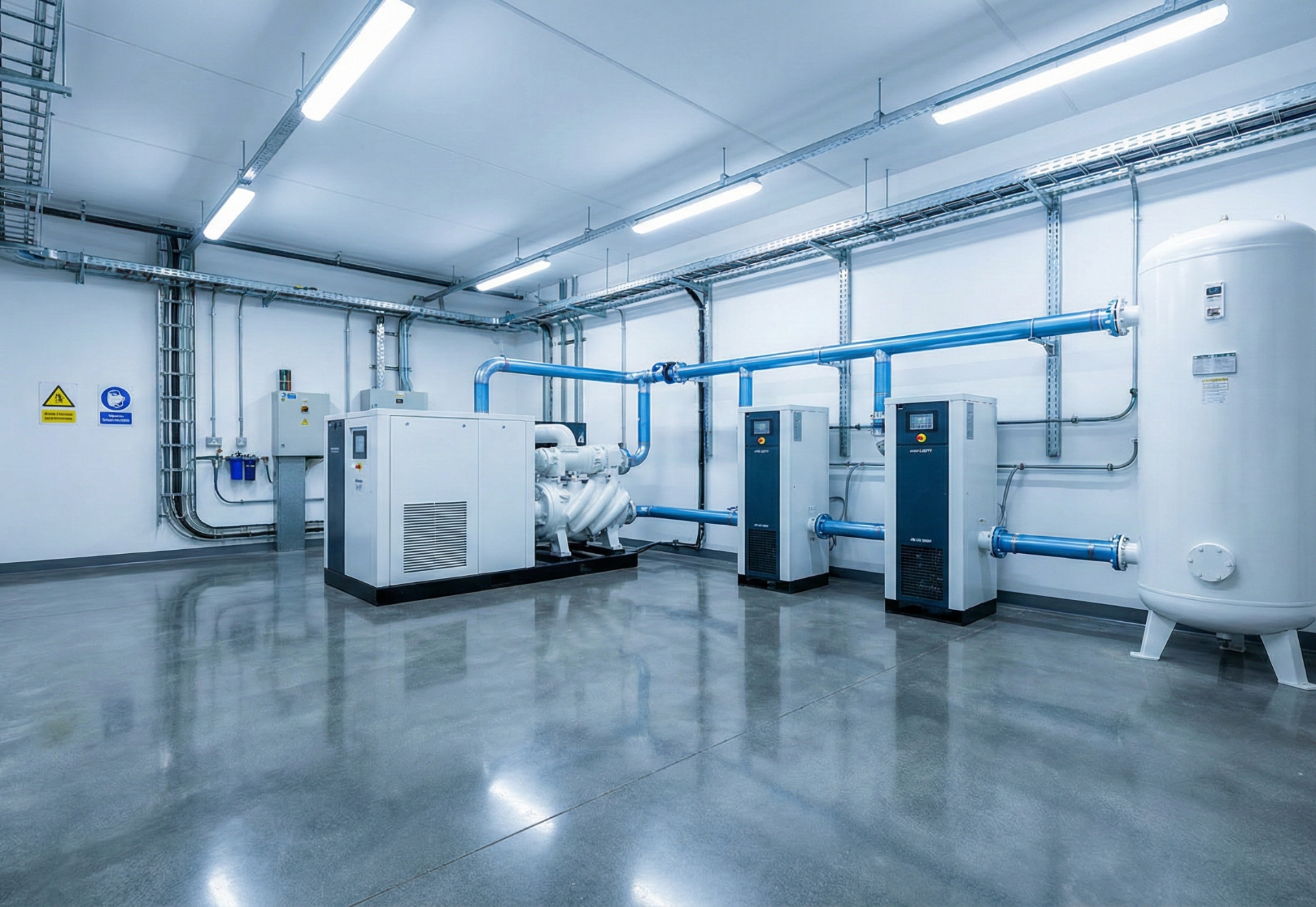
- Site Preparation and Foundation: Installing a stable, level foundation that can absorb vibration and support the machine's weight, along with ensuring adequate space for future servicing.
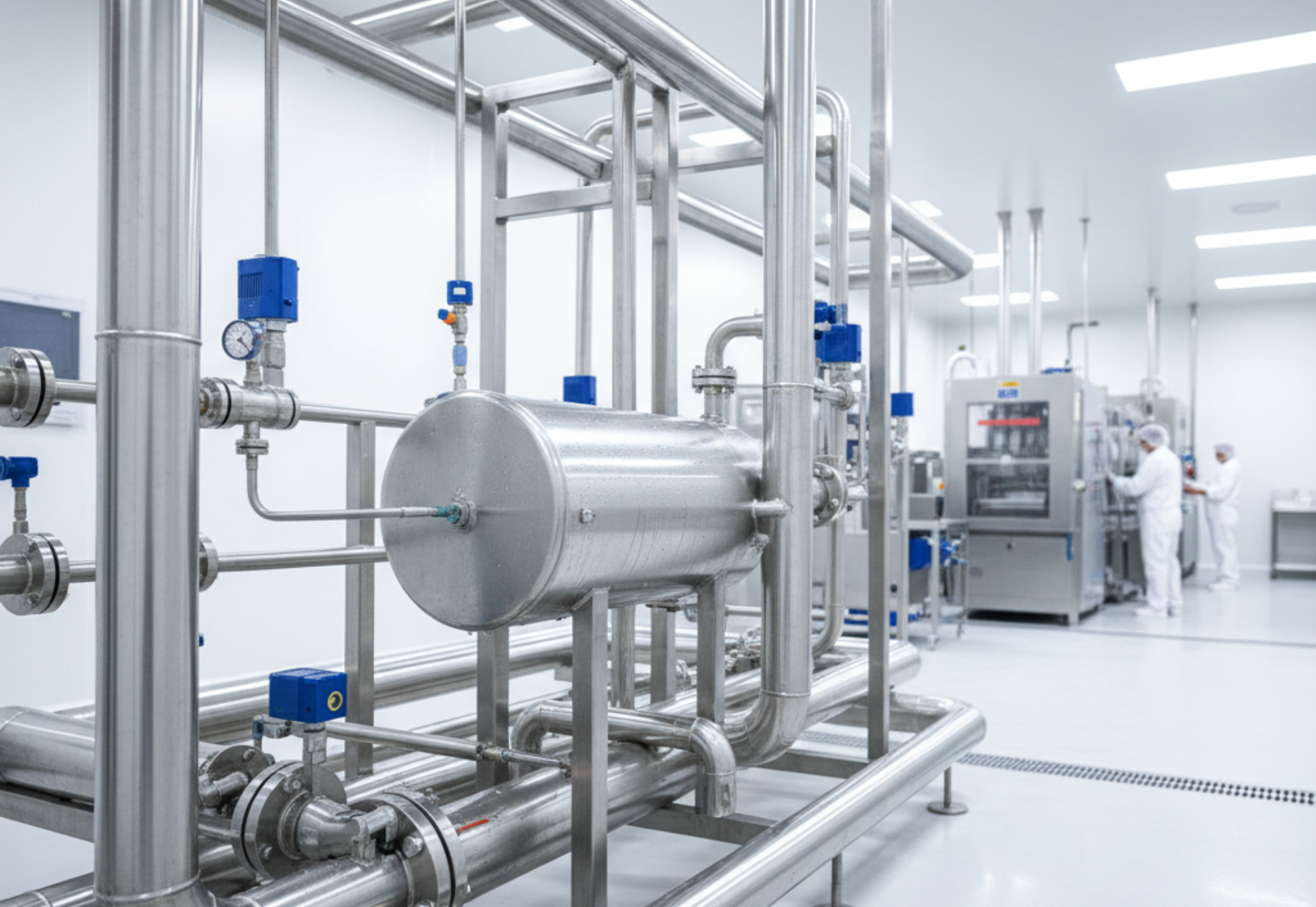
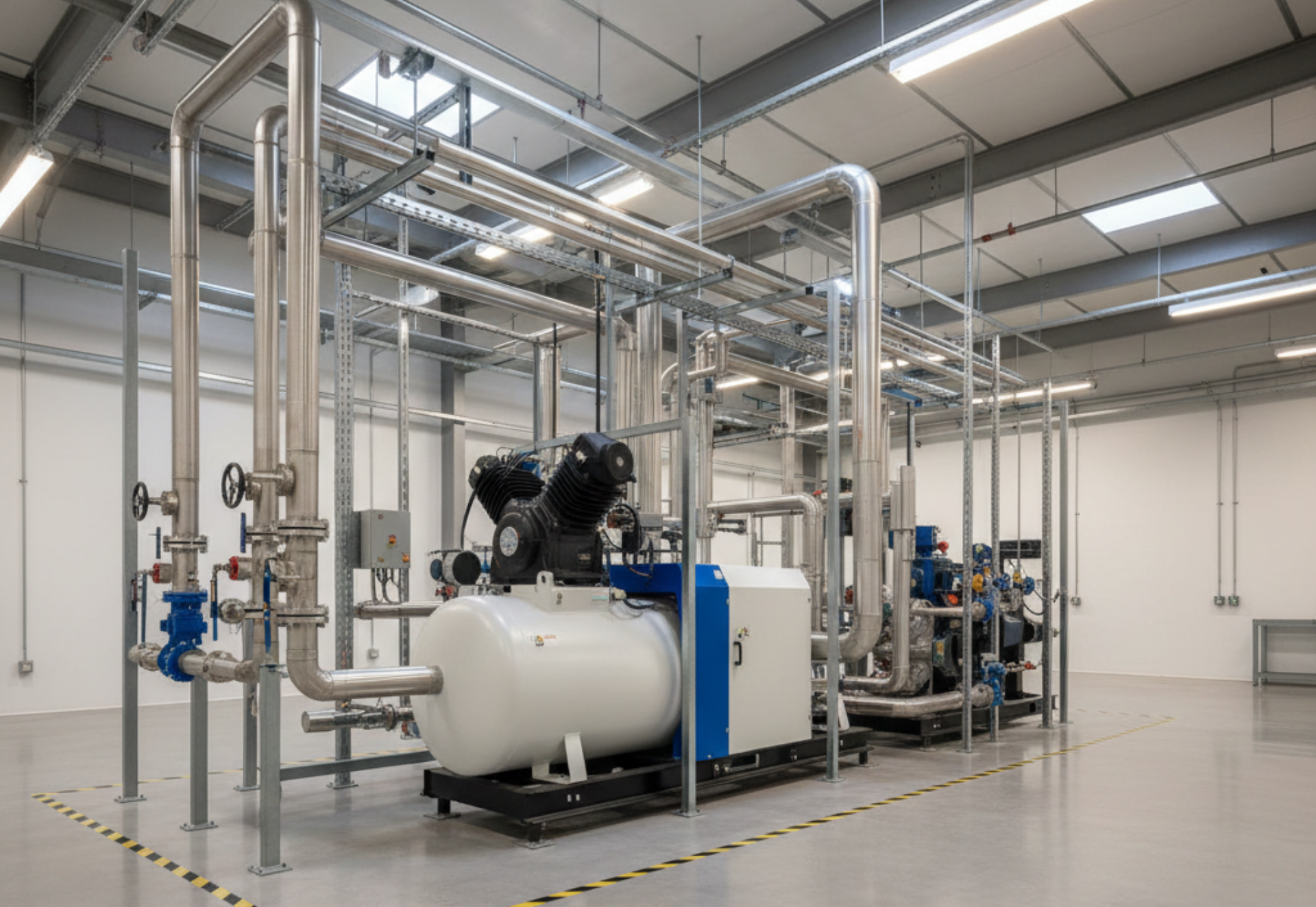
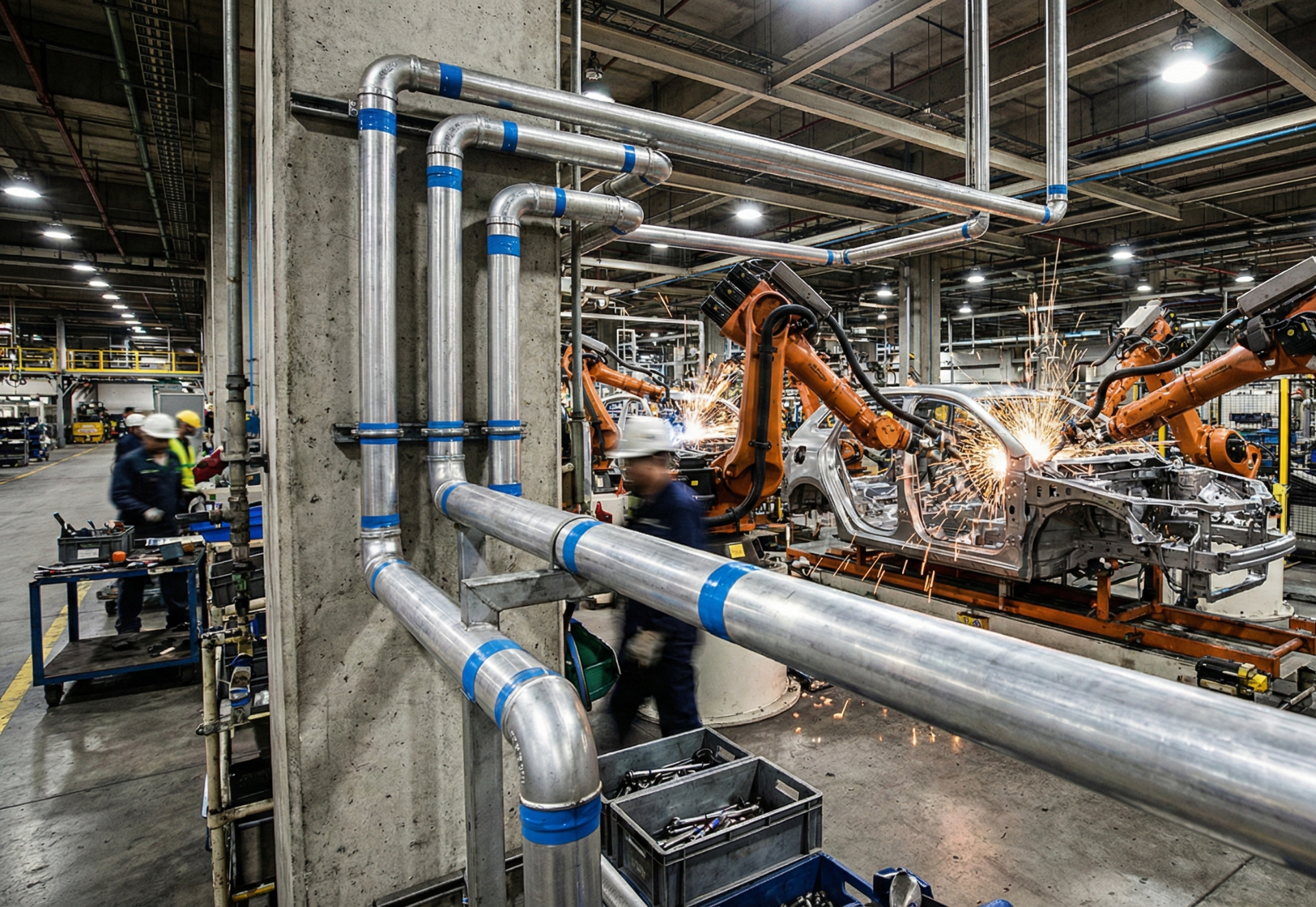
- Piping and Distribution Network: Designing and installing the right materials and diameters (e.g., aluminum, stainless steel) to minimize pressure drop and prevent leaks across the entire facility.
- Ventilation and Heat Recovery: Implementing proper airflow to manage the significant heat generated by the compressor, which can also be captured for facility heating or other processes.
Cutting corners during any stage of this complex installation process is a false economy. The marginal upfront savings are quickly and dramatically eclipsed by years of inflated energy costs, crippling downtime, and accelerated equipment failure. Doing it right the first time is not just a best practice; it is the single greatest determinant of a compressed air system's long-term profitability and reliability.
Compressor Installation Is a System Decision, Not a Drop-In Job
Industrial compressors don’t operate in isolation. They live inside a system that includes:
- Electrical supply and controls
- Ventilation and heat rejection
- Piping and airflow distribution
- Dryers, filters, and separators
- Plant layout and future expansion plans
Installing a compressor without addressing the system is how you end up with:
- Chronic overheating
- Pressure drops at points of use
- Excessive energy consumption
- Premature component failure
According to the U.S. Department of Energy, poor compressed air system design and installation are leading contributors to wasted energy and unreliable performance in industrial facilities.
IAS treats compressor installation as engineering work, not equipment placement.
Step One: Proper Sizing Before Anything Is Installed
The most expensive compressor problems start before the equipment arrives.
Oversizing wastes energy. Undersizing destroys compressors.
Correct sizing requires:
- Actual airflow demand (CFM), not guesses
- Pressure requirements at critical equipment
- Duty cycle and run hours
- Simultaneous demand, not peak nameplate totals
- Expansion planning
We routinely see systems installed “one size up just in case,” only to find the compressor running inefficiently for years. IAS performs airflow analysis so the system matches real operating conditions, not assumptions.
Electrical Setup: The Foundation Most Installers Overlook
Electrical issues are one of the top causes of early compressor failures.
Proper installation includes:
- Voltage verification and balance checks
- Correct breaker and starter sizing
- Grounding and surge protection
- Control wiring verification
- Startup load testing
Many “compressor problems” are actually electrical supply problems introduced during installation. IAS coordinates with plant electricians to ensure compressors receive clean, stable power from day one.
Ventilation and Heat Management: Where Reliability Is Won or Lost
Compressors make heat, lots of it.
If that heat isn’t managed correctly, performance suffers fast.
Common installation mistakes:
- Poor compressor room ventilation
- Hot air recirculation
- Inadequate clearance around equipment
- Ignoring ambient temperature limits
Excessive heat accelerates oil breakdown, damages seals, and increases shutdown risk. IAS designs installations with proper airflow paths, exhaust strategies, and temperature control to protect long-term reliability.
Piping Design: Pressure Loss You Can’t See
You can install the best compressor in the world and still lose performance through bad piping.
Piping problems include:
- Undersized pipe diameters
- Excessive elbows and restrictions
- Poor layout cis ausing pressure drops
- Inadequate condensate management
Organizations like the Compressed Air Challenge emphasize that distribution system design plays a major role in overall compressed air efficiency.
IAS designs piping layouts that support stable pressure, efficient flow, and future system growth, because pressure loss is paid for every hour the system runs.
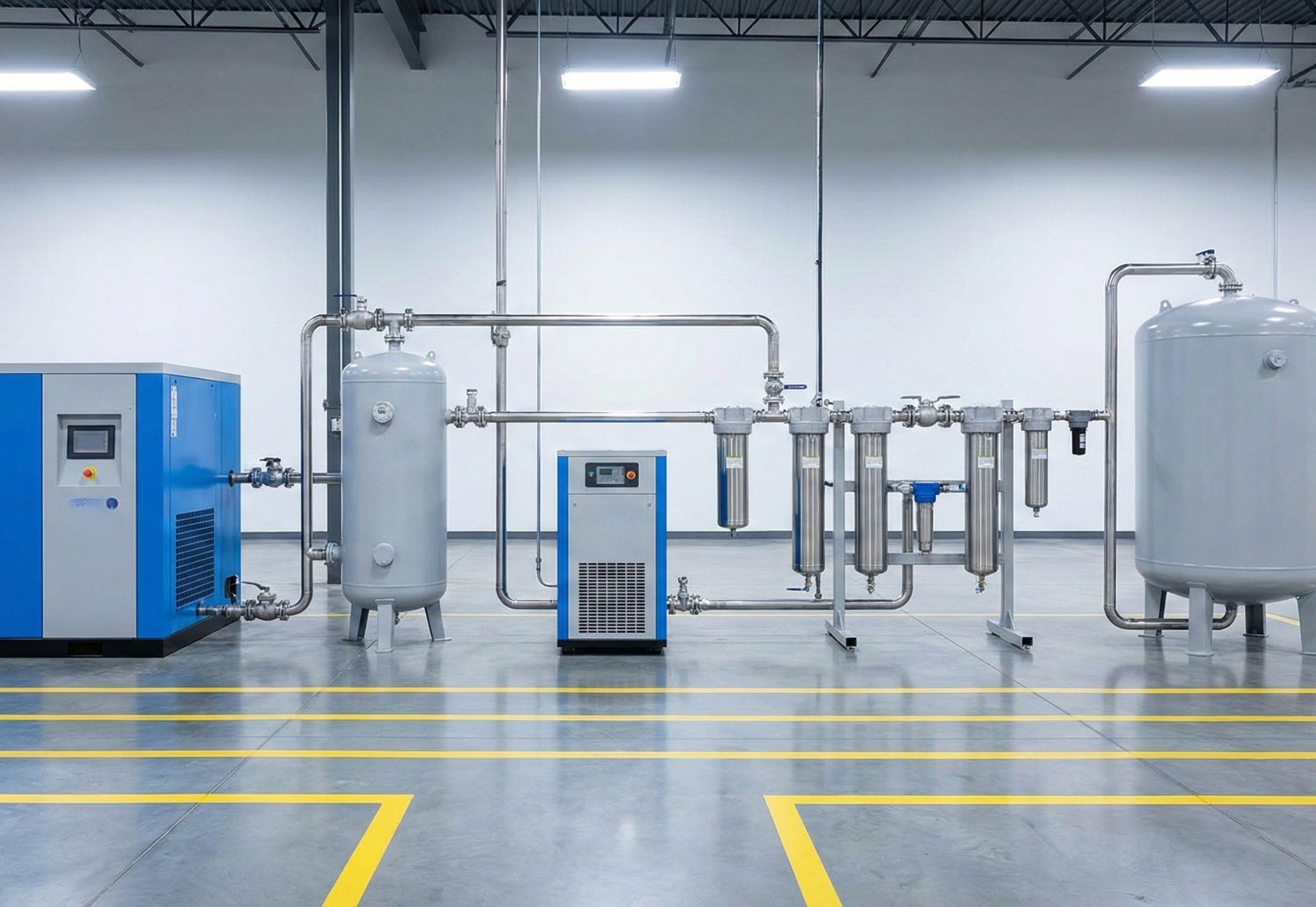
Integrating Dryers, Filtration, and Controls
Compressed air quality matters just as much as quantity.
Proper installation ensures:
- Dryers are sized for actual airflow
- Filtration matches air quality requirements
- Controls communicate correctly across equipment
- Moisture and contaminants are managed at the source
The International Organization for Standardization defines compressed air quality classes that depend on correct system integration, not just individual components.
IAS installs compressors as part of a complete air quality strategy, not a standalone machine.
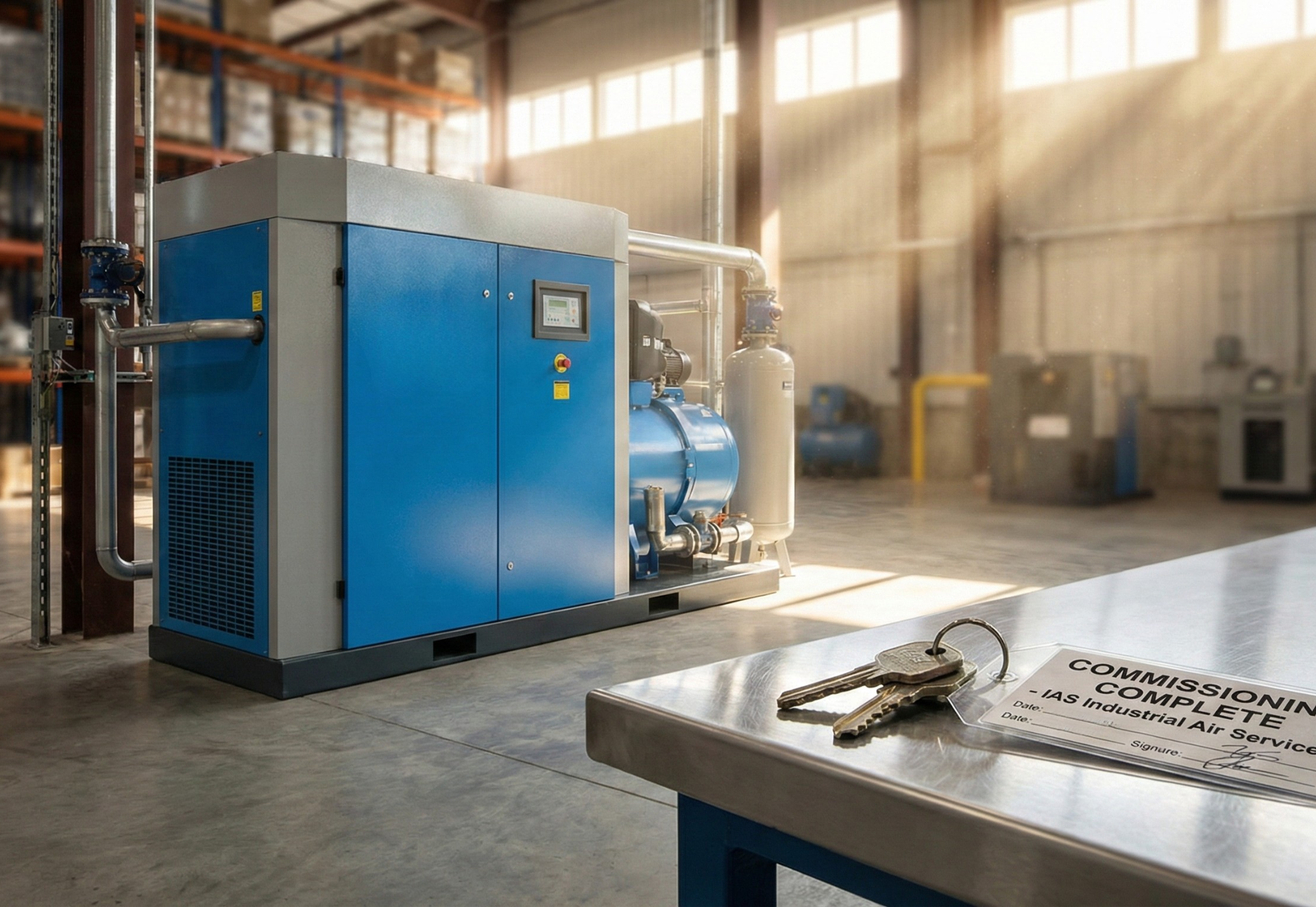
Commissioning: The Step Too Many Installers Skip
Commissioning is where installation turns into performance.
A properly commissioned system includes:
- Startup verification under load
- Pressure and temperature monitoring
- Control logic confirmation
- Leak checks
- Performance documentation
Skipping commissioning is how systems drift into inefficient operation without anyone noticing. IAS verifies performance before we leave the site, so you start with a system that’s actually delivering what was promised.
New Installations, Replacements, and Plant Expansions
IAS provides compressor installation services for:
- New facility builds
- Compressor replacements
- System expansions
- Energy efficiency upgrades
Whether you’re installing your first industrial compressor or replacing equipment that’s been running for decades, the principles stay the same: design for reality, not theory.
Why Facilities Trust Industrial Air Services
We don’t rush installs. We don’t guess. We don’t disappear after startup.
Industrial Air Services delivers:
- Pre-installation airflow analysis
- Professional system design
- Electrical and mechanical coordination
- Turnkey installation and commissioning
- Ongoing service and optimization
Our customers choose us because:
- We explain decisions clearly
- We install systems that work
- We support them long after the install
That’s how compressor installations become long-term assets, not recurring problems.

Frequently Asked Questions
1. How long does compressor installation take?
Installation timelines depend on system size and complexity. Smaller systems may take a day, while full industrial installations can take several days. IAS plans installs to minimize production disruption.
2. Can IAS install compressors purchased elsewhere?
Yes. IAS provides professional compressor installation services even if the equipment was sourced from another supplier. We focus on correct system performance—not sales exclusivity.
3. Is professional installation really worth the cost?
Absolutely. Improper installation leads to higher energy costs, frequent repairs, and shortened equipment life. Professional installation typically pays for itself through efficiency and reliability gains.
Install It Once. Install It Right.
If you’re planning a compressor upgrade, replacement, or new installation, don’t gamble on shortcuts.
Industrial Air Services provides compressor installation services that deliver:
- Reliable performance
- Lower operating costs
- Long equipment life
- Confidence in uptime
Contact IAS today to talk through your installation project with technicians who understand industrial compressed air from the ground up.