Industrial Equipment Sales and Service: How to Choose a Partner That Protects Your Uptime and ROI
In industrial operations, equipment isn’t just an asset; it’s the backbone of production, output quality, and operational stability. Whether it’s air compressors, dryers, filters, controls, or fully integrated compressed air systems, the right industrial equipment provider determines how efficiently your plant performs today and how reliably it runs tomorrow.
Most downtime doesn’t come from catastrophic failure. It comes from small oversights, poor installation, incorrect sizing, skipped maintenance, outdated systems, and service providers who disappear once the equipment is sold. For facilities in Texas and surrounding regions, selecting the right industrial equipment sales and service partner is one of the most important operational decisions you will make.
This comprehensive guide will help you understand what “sales and service” should actually mean, how to evaluate a provider, and why IAS (Industrial Air Services) delivers the type of technical expertise, reliability, and long-term support that keeps production moving and maximises ROI.
1. Industrial Equipment Sales and Service: Why It Matters
Choosing a provider isn’t about price, brand name, or availability; it’s about the partnership behind the equipment. Studies from the U.S. Department of Energy show that poorly designed or poorly maintained industrial systems can waste 20% to 50% of total energy consumption.
That’s why your provider must deliver far more than equipment. They must provide:
- Engineering guidance
- Correct sizing
- Proper installation
- Preventive maintenance
- Quick response support
- Reliable parts availability
- Long-term lifecycle management
A true industrial equipment provider should protect your uptime, stabilise production, and lower the total cost of ownership (TCO). Anything less creates hidden costs, reliability risks, and operational inefficiencies that compound over time.

2. What “Industrial Equipment Sales and Service” Should Really Mean
The industrial sector is filled with companies that sell equipment. Very few provide the full engineered support necessary to keep that equipment operating at peak efficiency.
A real partner provides:
2.1 Expert Consultation & Engineering
Your provider should help you choose equipment based on:
- Demand profile
- Peak vs. continuous load
- Air quality requirements
- Ambient conditions
- Piping layout
- Existing system integration
- TCO and long-term energy performance
IAS delivers engineered system design, not guesswork.
2.2 Correct Sizing and System Selection
Mis-sized equipment is one of the top causes of energy waste and premature failure. According to the Compressed Air & Gas Institute (CAGI), more than 50% of industrial compressed air systems suffer from efficiency losses due to incorrect sizing or improper system setup.
Your provider should understand how to size the:
- Air compressor
- Dryer
- Filtration sequence
- Storage tank
- Controls and VFDs
- Ventilation and cooling system
IAS ensures every component works as a unified, efficient system.
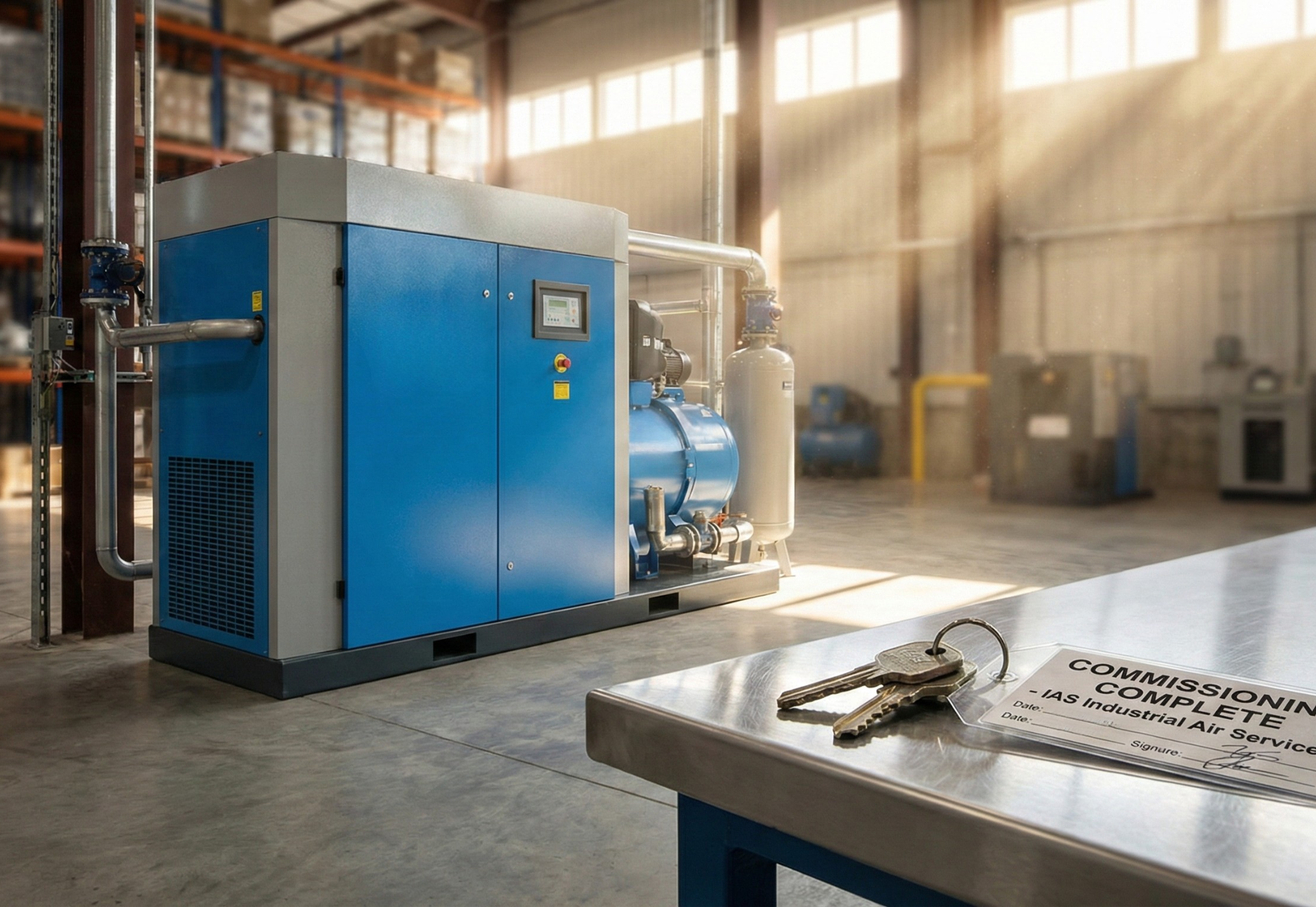
2.3 Professional Installation & Commissioning
Improper installation can create:
- Air leaks
- Pressure drop issues
- Moisture contamination
- Hot air recirculation
- Reduced compressor lifespan
IAS provides turnkey installation with engineering oversight, ensuring your system is optimised from Day 1.
2.4 Preventive Maintenance & Emergency Service
Equipment is only as reliable as its care. According to the Society for Maintenance & Reliability Professionals (SMRP), preventive maintenance can reduce unplanned downtime by 35% to 45%.
IAS delivers preventive maintenance programs that:
- Protect your investment
- Stabilize performance
- Reduce repair frequency
- Extend lifespan
- Lower energy usage
And when emergencies happen, IAS responds quickly with certified technicians and the right parts.
2.5 Long-Term Lifecycle Support
The best equipment providers think in years, not weeks. IAS supports the entire lifecycle through:
- Parts and consumables
- Lubricant delivery
- System upgrades and retrofits
- Air quality improvement
- Controls optimization
- Load balancing and system redesign
This is how uptime is protected long-term.
3. Qualities of a Reliable Industrial Equipment Provider
When choosing an industrial equipment partner, one responsible for the smooth operation, maintenance, and longevity of your critical assets, the selection process must go beyond simple price comparison. A true partner protects your uptime, minimises your total cost of ownership (TCO), and ensures a strong return on your investment (ROI).
To secure this vital relationship, evaluate potential providers in these critical areas:
A. Technical Expertise and Certifications
- Deep Product Knowledge: The provider should have extensive, up-to-date knowledge of the specific industrial equipment they sell and service. This includes understanding the latest technologies, common failure points, and optimal operating parameters.
- Certified Technicians: Ensure their service team holds relevant industry certifications and receives ongoing, rigorous training directly from the equipment manufacturers. This verifies their ability to handle complex diagnostics and repairs correctly.
- Specialisation: Look for providers who specialise in your industry or equipment type (e.g., hydraulics, pneumatics, CNC machinery, material handling). Specialisation often translates into faster, more accurate service.
B. Service and Support Infrastructure
- Rapid Response Time: Uptime is paramount. A reliable partner must offer a guaranteed service level agreement (SLA) with clear response times for emergencies. 24/7/365 support is often non-negotiable for mission-critical operations.
- Proactive Maintenance Programs: The best providers move beyond reactive repair and offer robust, data-driven preventative and predictive maintenance plans. These programs use condition monitoring to identify potential failures before they occur, drastically reducing unexpected downtime.
- Comprehensive Parts Inventory: Delays caused by waiting for parts are costly. The provider should maintain a well-stocked, regional inventory of genuine, OEM-certified replacement parts to ensure quick turnarounds on repairs.
C. Reliability and Financial Stability
- Proven Track Record: Request case studies, references from clients in similar industries, and evidence of a long-standing presence in the market. Longevity often indicates stability and consistent quality of service.
- Transparency in Pricing: All costs, including parts, labour, travel, and emergency call-out fees, should be clearly documented and agreed upon upfront. Hidden costs erode trust and budget.
- Safety Compliance: The provider must adhere to all relevant local, national, and industry safety regulations (e.g., OSHA, ISO standards). Their commitment to safety reflects their commitment to professionalism and risk mitigation on your site.
D. Technology Integration and Future-Proofing
- Adoption of Modern Tools: Look for providers leveraging modern technologies like IoT (Internet of Things) sensors, remote diagnostic tools, and digital service management platforms. These tools improve efficiency and provide valuable data insights.
- Consultative Approach: A top partner acts as a consultant, not just a vendor. They should offer advice on equipment upgrades, fleet optimisation, and energy efficiency to help future-proof your operations and maximise ROI over the equipment's lifecycle.
- Data and Reporting: They should provide clear, detailed service reports, maintenance logs, and performance metrics that allow you to track asset health, TCO, and service effectiveness.
4. Common Problems Caused by Poor Industrial Equipment Providers
Choosing the wrong partner can lead to operational, financial, and safety issues.
4.1 Frequent Breakdowns
Improper installation or cheap components exist at the root of most failures.
4.2 Higher Energy Bills
Mis-sized compressors and poor airflow management force systems to work harder.
4.3 Moisture in Air Lines
Undersized dryers or incorrect filtration damage tools, valves, and product quality.
4.4 Shorter Equipment Lifespan
Lack of maintenance accelerates wear, causing premature failure.
4.5 Emergency Shutdowns
Heat buildup, lubrication issues, and pressure instability lead to forced shutdowns and lost production.
4.6 No Accountability
Once the sale is complete, poor providers disappear. IAS delivers long-term service and support.
5. How IAS Supports Your Complete Industrial Equipment Lifecycle
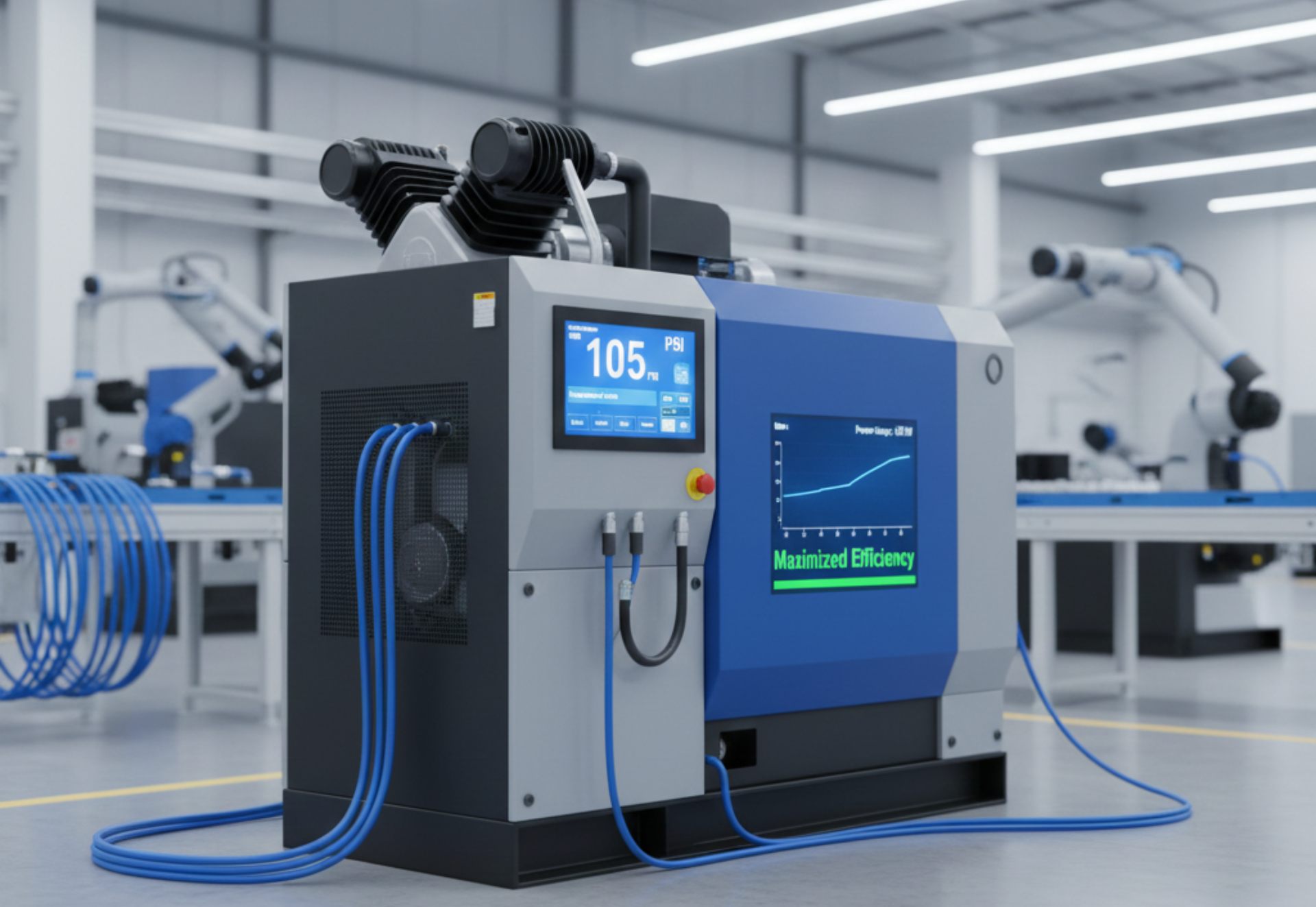
Industrial Air Services is built around one promise: to protect your uptime with engineered reliability.
IAS provides:
5.1 Industrial Equipment Sales
- Air compressors
- Air dryers
- Filtration systems
- Controls and automation
- Storage tanks
- Complete compressed air solutions
5.2 System Design and Engineering
Every design is based on:
- Demand analysis
- Pressure mapping
- Energy evaluation
- Air quality requirements
- Heat and ventilation needs
5.3 Installation & Commissioning
Turnkey implementation ensures:
- Correct airflow
- Proper electrical connection
- Ventilation compliance
- Stable pressure performance
- Safe operation
5.4 Preventive Maintenance Programs
IAS PM programs include:
- Lubrication changes
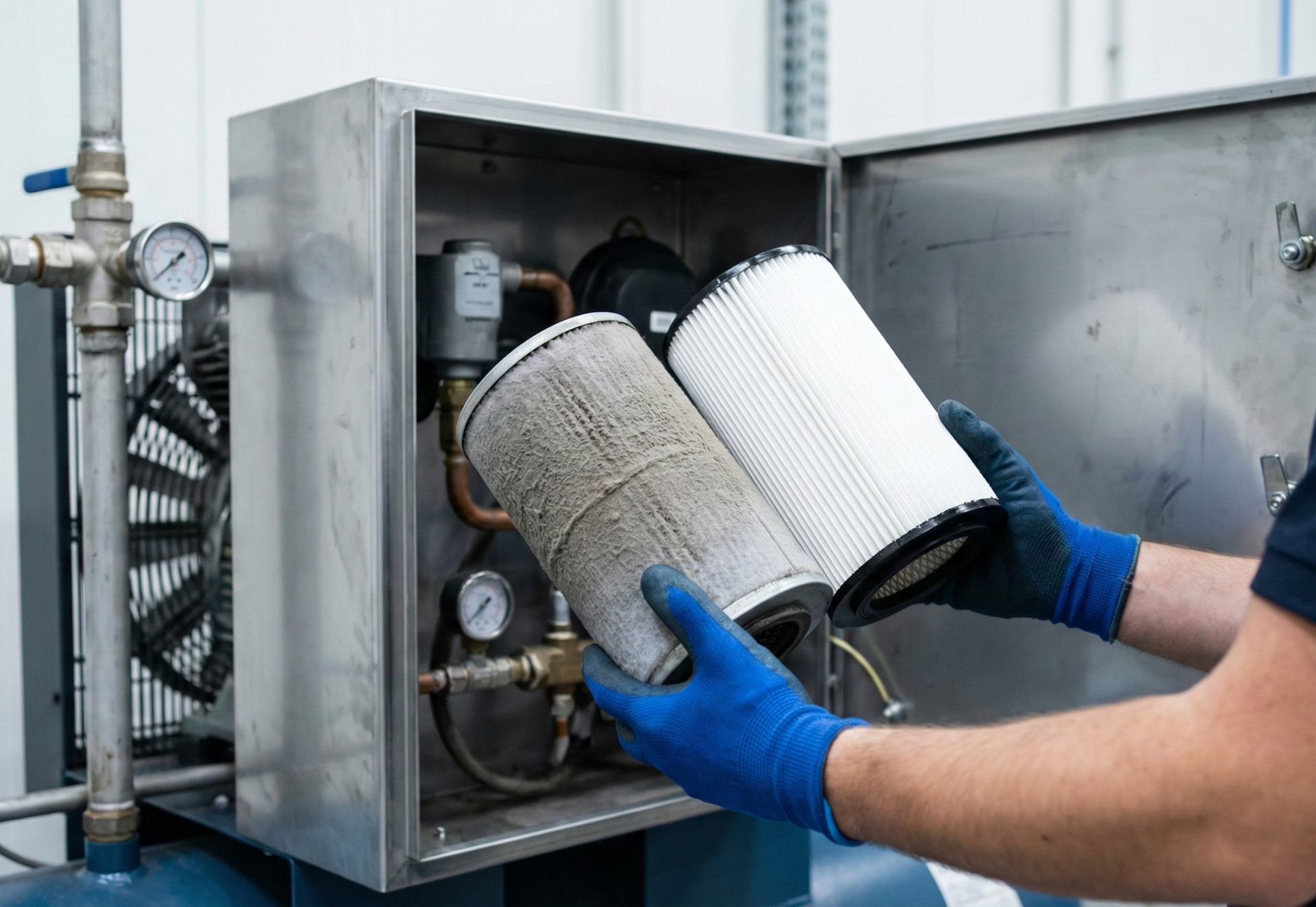
- Filter replacement
- Cooler cleaning
- Dryer performance checks
- Leak detection
- Belt and coupling inspection
- Vibration monitoring
5.5 Emergency Service & Repairs
Fast response reduces downtime and protects production schedules.
5.6 Parts & Consumables
IAS supplies:
- OEM filters
- Lubricants
- Separators
- Valves
- Sensors
- Maintenance kits
6. When to Partner With IAS
You should contact IAS if your facility is experiencing:
- Pressure instability
- Moisture issues
- Overheating
- Rising energy costs
- Frequent shutdowns
- Inconsistent air quality
- Slow service response from your current provider
- Equipment nearing end-of-life
- Expansion or plant upgrades
IAS brings the engineering expertise needed to correct these issues and stabilise long-term performance.
Protect Your Equipment. Protect Your Uptime. Partner With IAS.
For industrial equipment sales, installation, and full lifecycle service, choose a partner engineered for reliability.
Learn more: https://iastx.com/
Request a facility assessment: https://iastx.com/
Schedule service: https://iastx.com/
Industrial Air Services supports manufacturers, warehouses, fabrication shops, automotive facilities, production plants, and more across Texas with solutions designed for uptime, efficiency, and long-term ROI.

Frequently Asked Questions
1. What are the 3 types of sales?
The three main types of sales are transactional sales, consultative sales, and solution-based sales. In the industrial sector, solution-based sales provide the greatest long-term value because they focus on engineering, system design, and lifecycle support, not just selling equipment.
Industrial Air Services (IAS) offers true solution-based sales, ensuring every compressor, dryer, and industrial air system is selected, installed, and supported to maximise reliability and uptime.
Learn more: https://www.iastx.com/
2. What qualifies as industrial air equipment?
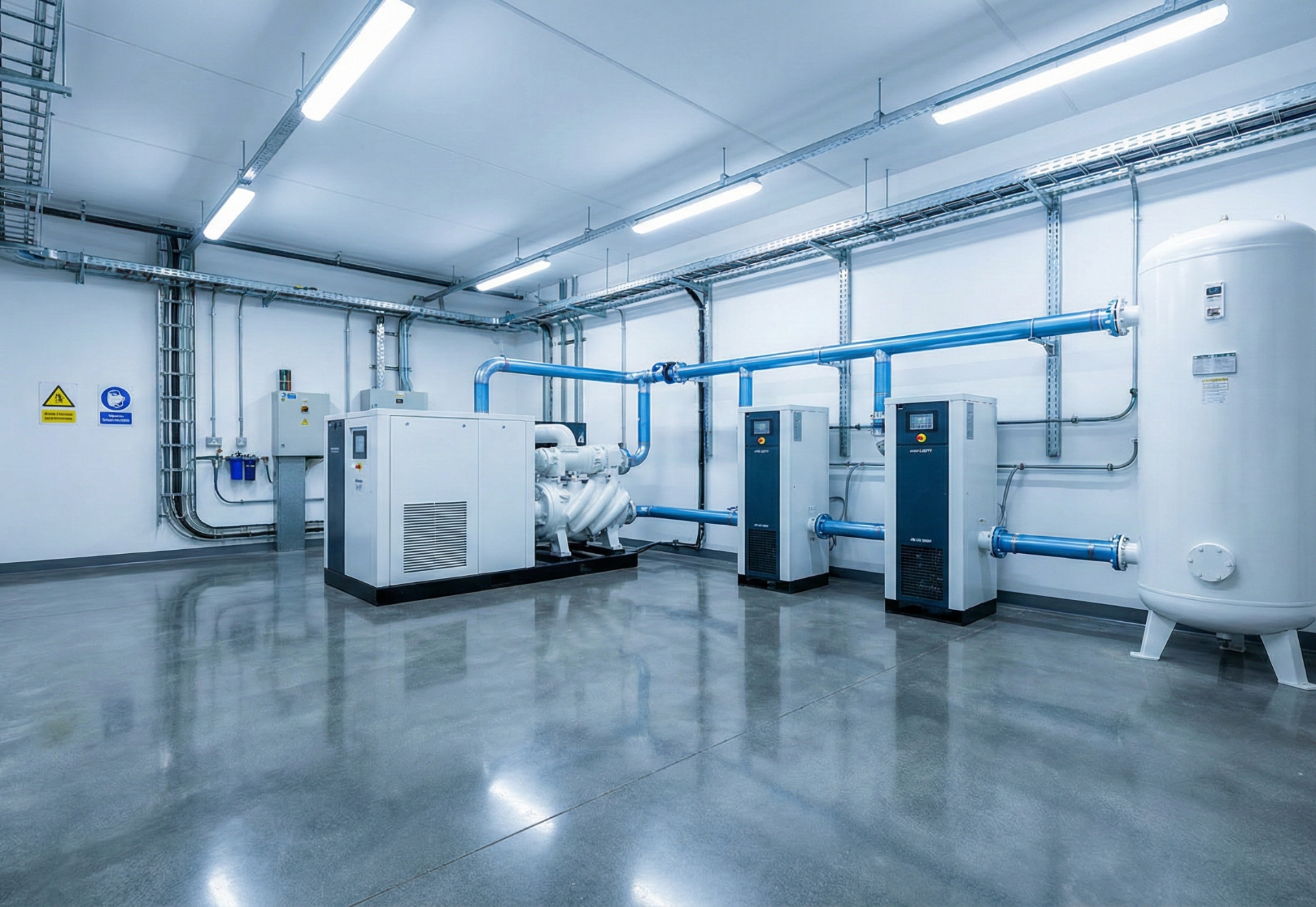
Industrial air equipment includes air compressors, air dryers, filtration systems, storage tanks, controls, condensate management systems, and all components required to deliver clean, reliable compressed air. This equipment powers manufacturing, automation, fabrication, packaging, and industrial operations.
IAS provides full industrial air systems, from equipment sales to installation and long-term maintenance programs.
Explore solutions: https://www.iastx.com/
3. How long does industrial equipment last?
Most industrial air equipment, such as rotary screw compressors and dryers, lasts
10–15 years or more with proper maintenance. However, lifespan depends heavily on environment, load profile, air quality, and service frequency.
IAS offers engineered maintenance programs that extend equipment life, prevent failures, and maximise your return on investment.
Protect your equipment: https://www.iastx.com/