Industrial Accessories That Maximize Air & Vacuum System Performance (Must-Have Components)
In industrial environments, every component in an air or vacuum system, no matter how small, has a direct impact on performance, efficiency, energy consumption, and long-term reliability. While compressors and vacuum pumps often get the spotlight, the real secret to system uptime lies in the accessories supporting them. Filters, regulators, hoses, fittings, gauges, dryers, and valves serve as the backbone that keeps operations running smoothly.
When accessories are low-quality, mismatched, or poorly maintained, businesses experience symptoms like pressure drops, excess moisture, contamination, inconsistent vacuum levels, and premature equipment failure. But when properly selected and maintained, the right accessories can extend equipment lifespan by years, reduce energy waste, and improve overall system stability.
In this guide, we break down the essential industrial accessories every operation should consider, why they matter, and how choosing the right ones positions your equipment for maximum uptime and ROI.
Why Industrial Accessories Matter More Than Most Teams Realize
The performance of any compressed air or vacuum system depends on three things:
- Air quality
- Pressure and flow consistency
- Contamination control
Accessories directly influence all three. A high-end compressor or vacuum pump can’t perform if:
- filters clog,
- hoses leak,
- regulators drift out of range,
- moisture enters the line,
- fittings fail under load.
Studies show that air leaks alone can waste 20–30% of energy in a compressed air system (U.S. Department of Energy)
Choosing the right accessories and maintaining them protects system integrity and prevents unnecessary energy losses.
The Must-Have Industrial Accessories for Air & Vacuum Systems
Below are the critical components that determine system performance, arranged by category for industrial clarity.
1. Filtration Systems
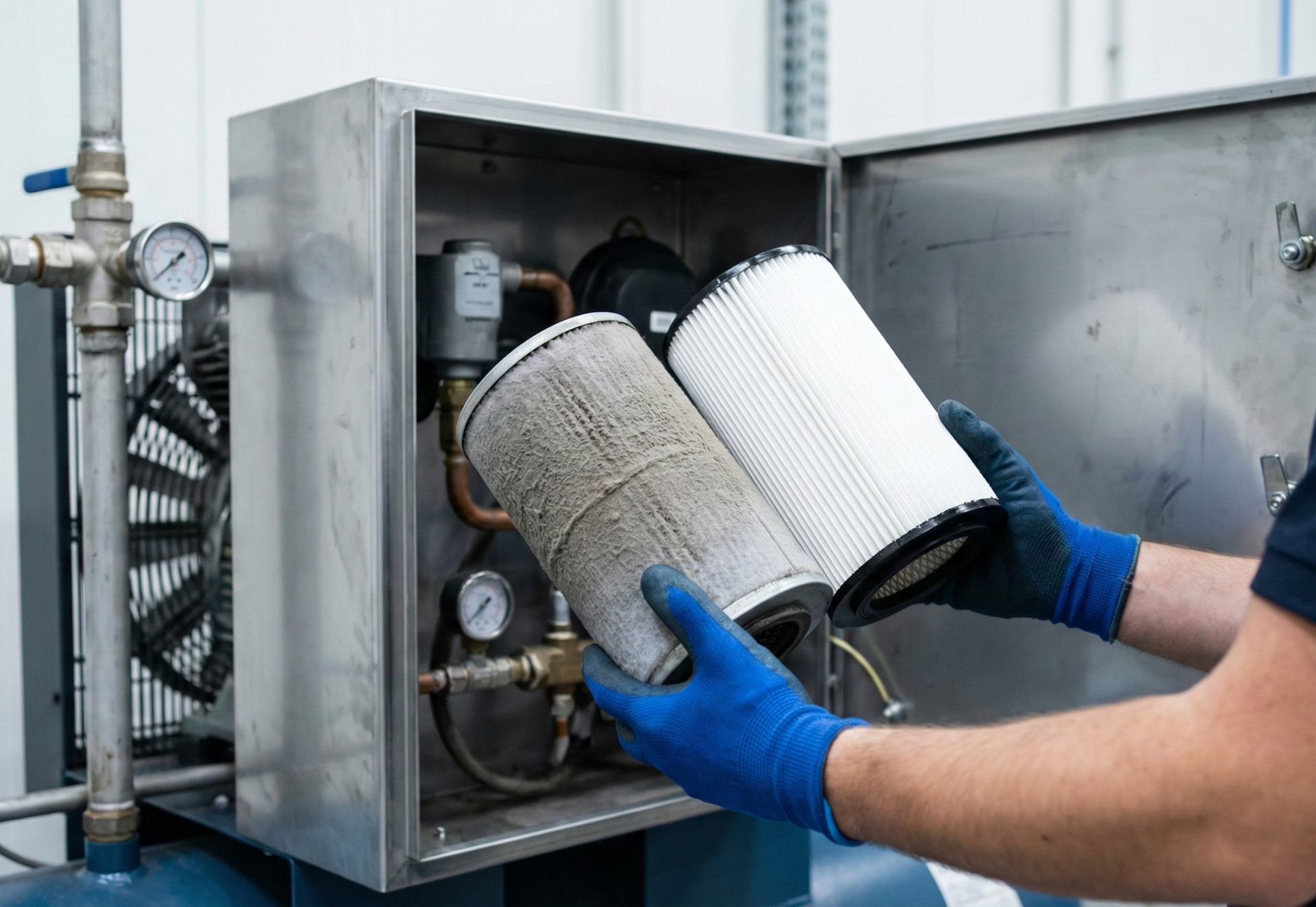
Filtering contaminants is essential for protecting both equipment and end-use processes. Quality filtration prevents:
- particulates from damaging tools
- oil from contaminated products
- moisture from corroding internal components
Types of Filters
- Particulate filters
- Coalescing filters
- High-efficiency oil-removal filters
- Carbon filters (for vapor removal)
Oil and particulate contamination are among the leading causes of pneumatic tool failure. According to Atlas Copco, filtration is responsible for up to 25% longer system life when properly implemented.
2. Air Dryers
Moisture is a silent system killer. It corrodes pipes, destroys tools, affects product quality, and increases the risk of microbial growth.
Common Dryer Types
- Refrigerated dryers (for general industrial use)
- Desiccant dryers (for extremely dry air applications)
- Membrane dryers
For vacuum systems, moisture also reduces achievable vacuum levels and causes premature seal wear.
3. Regulators & Pressure Control Devices
Regulators ensure the correct PSI reaches tools and production equipment. An overly high PSI wastes energy, while insufficient PSI restricts performance.
A properly tuned regulator can reduce energy consumption by 8–12%, according to compressed air industry studies.
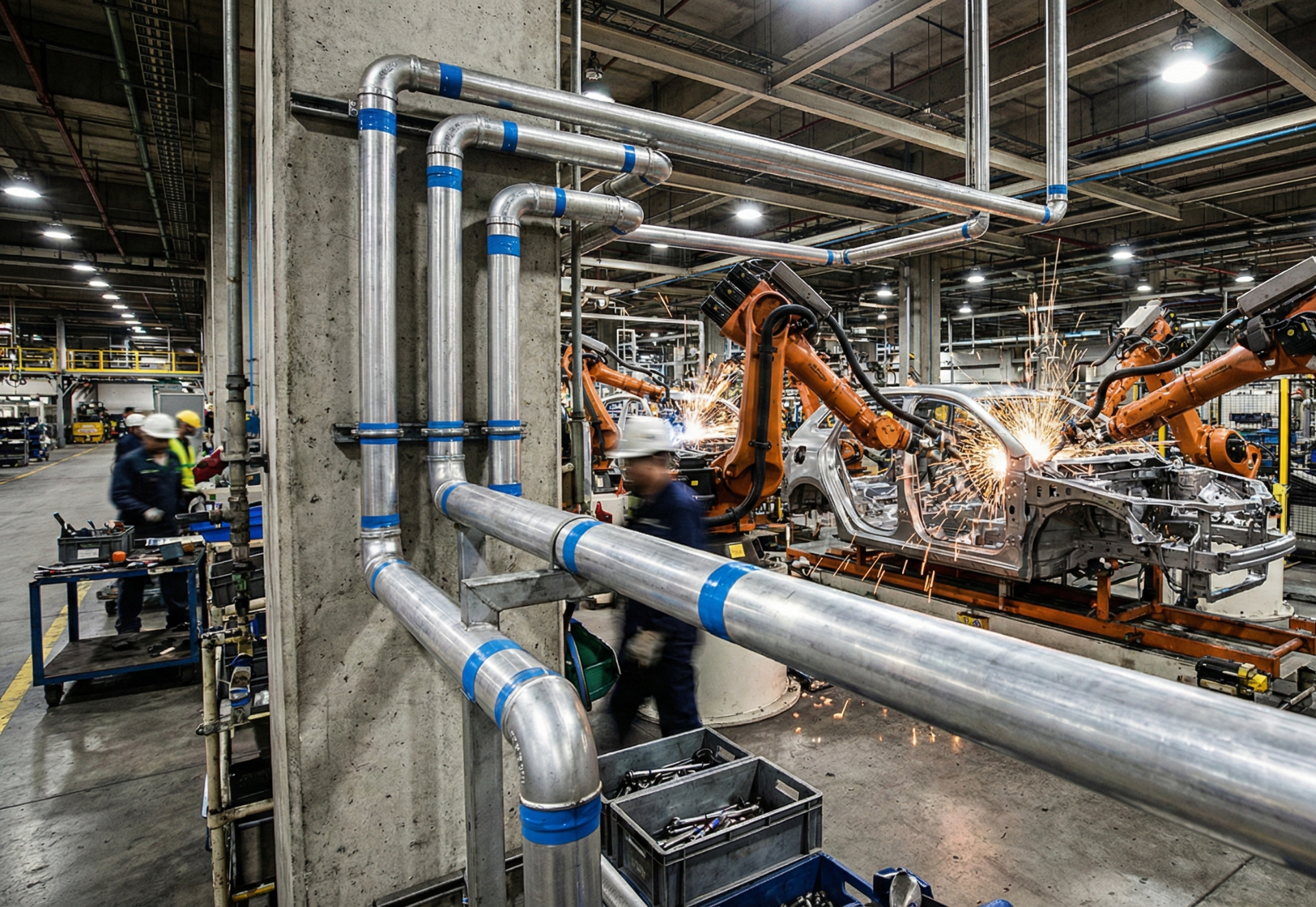
4. Hoses, Tubing & Piping
These components transport compressed air or vacuum throughout a facility. Their quality determines:
- flow efficiency
- pressure stability
- leak prevention
Poor-quality hoses and connectors are the main cause of air loss in aging facilities. Flexible, industrial-grade materials, preferably reinforced, are essential.
5. Fittings & Connectors
These small components are often taken for granted, but they hold systems together—literally.
Examples:
- Quick-connect fittings
- Threaded connectors
- Couplers
- Push-to-connect fittings
Choosing high-quality fittings prevents:
- leaks
- pressure drops
- unexpected line separations
- contamination
OEM-grade fittings provide a tighter seal and longer service life.
6. Gauges & Measurement Devices
Accurate system readings are essential for preventive maintenance and performance monitoring.
Key gauges include:
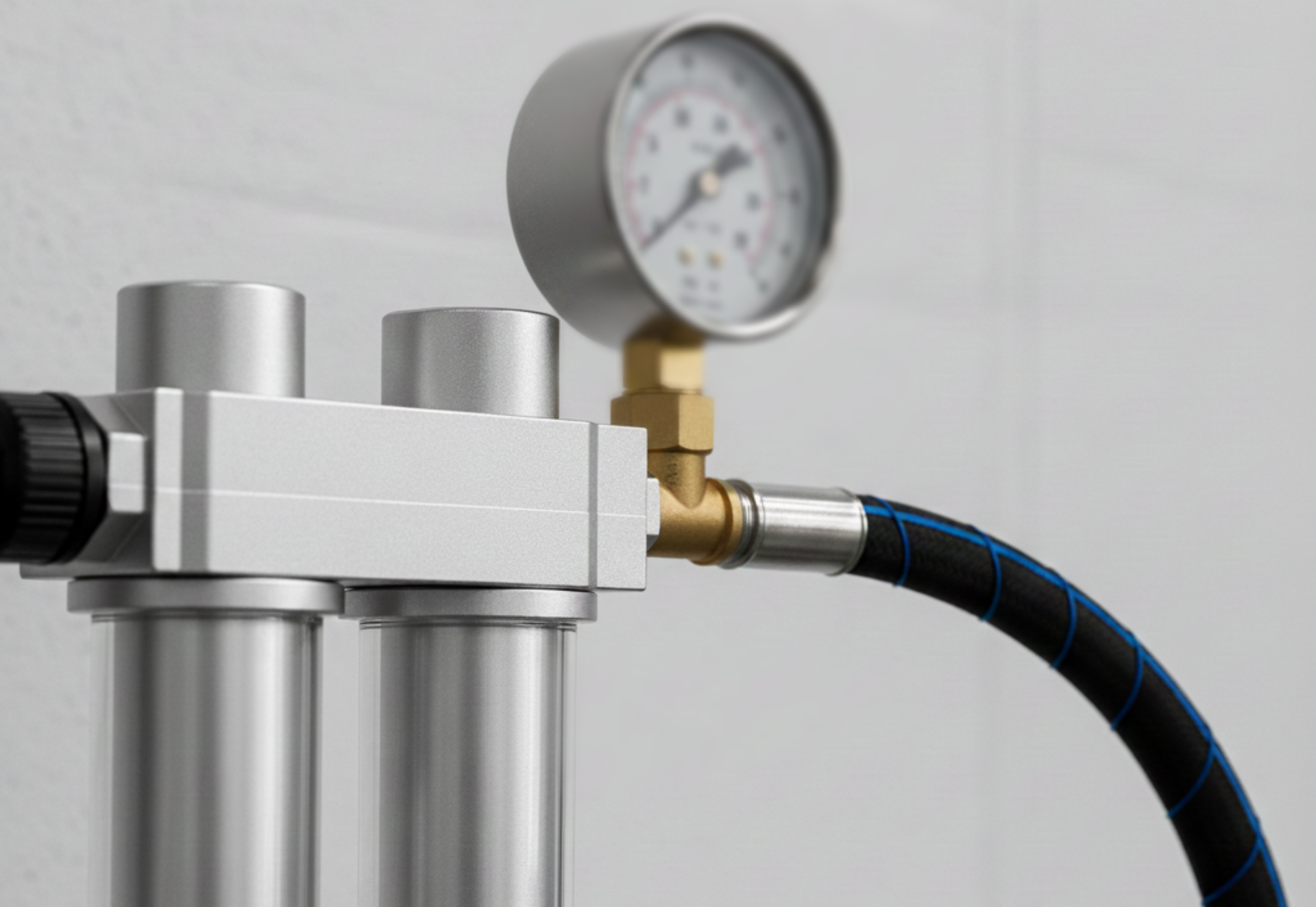
- Pressure gauges
- Vacuum gauges
- Differential pressure indicators
If gauges drift or fail, entire systems can run under unsafe conditions or waste thousands in energy.
7. Lubrication Systems
Air tool longevity and rotary equipment health depend heavily on proper lubrication.
Lubricators supply controlled oil mist to tools, preventing:
- early wear
- overheating
- friction buildup
This small accessory can extend tool life by 30–50%.
8. Valves (Control, Safety, and Isolation Valves)
Valves regulate flow, manage system direction, and protect against overpressure conditions.
Types include:
- Solenoid valves
- Ball valves
- Check valves
- Safety relief valves
Without high-quality valves, system stability and safety are compromised.
9. OEM Replacement Parts
Using OEM parts instead of third-party copies ensures:
- correct tolerances
- compatibility with system pressures
- energy efficiency
- longer equipment life
Industrial Air Services provides OEM accessories and parts designed for long-term industrial performance.
How Accessories Influence Industrial Uptime
Accessories impact uptime in five major ways:
1. Reducing System Contamination
Filters, dryers, and proper piping prevent contaminants from reaching expensive equipment.
2. Stabilising Pressure & Flow
Regulators, gauges, and leak-free fittings ensure a stable downstream pressure profile.
3. Protecting Pumps & Compressors
Accessories prevent overloading and overheating, which are the leading causes of unplanned shutdowns.
4. Maintaining Energy Efficiency
Eliminating leaks and optimising flow can reduce operational energy costs by up to 30%.
5. Extending Equipment Lifespan
Clean, dry, stable air and vacuum lines dramatically slow internal wear.
Choosing the Right Accessories: Engineering-Level Decision Guide
Below is the selection checklist used by performance-focused engineers:
1. Understand Air Quality Requirements
- ISO 8573-1 class
- Oil content limits
- Moisture tolerance
- Particle size requirements
Applications like food production, medical environments, and electronics demand high-purity air.
2. Match Accessories to System Type
Vacuum systems have different requirements than compressed air systems.
Example:
- Vacuum lines need leak-tight fittings
- Compressed air lines need moisture management
Each accessory must support the correct pressure or vacuum range.
3. Size Components Correctly
Undersized filters and dryers choke the flow.
Oversized lines reduce efficiency.
Engineering the right size ensures optimal velocity and stability.
4. Evaluate Environmental Conditions
Heat, humidity, and chemical exposure change which accessories will last the longest.
Facilities with heavy moisture loads require more robust drying systems.
5. Prioritise OEM Compatibility
Mixing incompatible fittings or filters can create restrictions, leaks, and premature failure.
Always match accessories with manufacturer specs.
Why Partner With Industrial Air Services for Industrial Accessories?
Industrial Air Services provides:
- OEM-grade parts and accessories
- Expert engineering consultation
- Leak detection and system optimization
- Preventive maintenance services
- Vacuum and compressed air system upgrades
Industrial facilities trust Industrial Air Services because we deliver:
- Higher efficiency
- More reliable performance
- Reduced downtime
- Extended system lifespan
When uptime matters, cutting corners on accessories isn’t an option.
Equip Your Facility With High-Performance Accessories That Last
Ready to upgrade your air or vacuum system components?
Looking for a partner who understands engineering, uptime, and ROI?
Visit Industrial Air Services for high-quality accessories, replacement parts, and expert support.
Protect your equipment. Protect your productivity.

FAQs
1. How often should air filters be replaced in industrial systems?
Most facilities replace filters every 3–6 months, depending on environmental conditions and workload. Heavy-use systems may require monthly changes.
2. What’s the most common cause of compressed air system inefficiency?
Leaks. They account for 20–30% of energy waste. Regular inspections and high-quality fittings prevent these losses.
3. Do vacuum pumps require different accessories than air compressors?
Yes. Vacuum systems require components designed for negative pressure, including vacuum-rated fittings, hoses, and gauges. Using positive-pressure accessories in vacuum applications can lead to failure and leaks.