Compressor Service Built for Reliability: The Maintenance Strategy That Cuts Costs and Prevents Unplanned Downtime
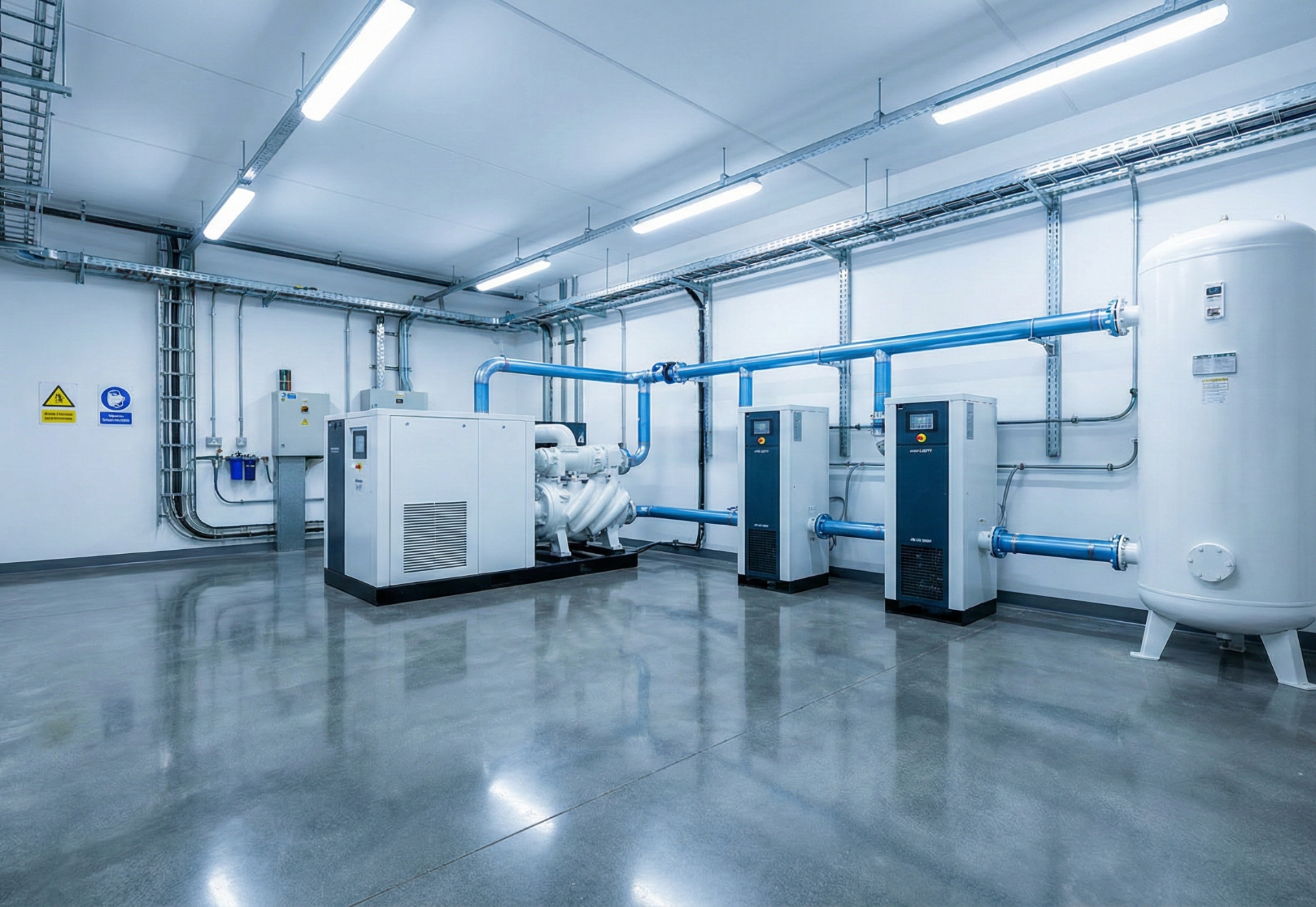
Industrial compressed air systems are the silent workhorses of modern manufacturing, integral to everything from simple pneumatic tools to complex automated production lines. These systems, whether utilizing advanced rotary screw, reciprocating piston, or centrifugal technology, are specifically engineered for continuous, high-pressure output under the most demanding and often harsh industrial conditions. However, their reliability is not inherent; it is entirely dependent on the rigor and quality of the maintenance strategy implemented. An expensive, state-of-the-art compressor is only as good as the service it receives.
When compressor service is executed with precision and foresight, it acts as a powerful shield for the entire operation. It actively protects critical production uptime by minimizing the risk of sudden failure, stabilizes air pressure across the network to ensure consistent tool and machine performance, dramatically lowers energy consumption by maintaining peak system efficiency, and significantly extends the operational lifespan of the core equipment.
Conversely, when compressor maintenance is neglected or treated as a low-priority chore, the consequences are predictable and costly. The system inevitably begins a gradual, insidious decline. Efficiency plummets as leaks develop and internal components foul, making the system less powerful and more energy-hungry. Operating predictability erodes, introducing risk to production schedules. Ultimately, the system becomes exponentially more expensive to operate and vastly increases the probability of catastrophic, unplanned downtime.
At Industrial Air Services, we fundamentally reject the notion of compressor service as merely a routine, reactive task. Instead, we view it as a proactive, high-yield
reliability investment, a crucial component of overall asset management. Every single maintenance intervention, from a scheduled oil and lubricant change and the replacement of critical air and oil filters, to a detailed system-wide inspection and advanced vibration analysis, has significant downstream effects on the system's long-term performance, energy footprint, and capital expenditure planning.
This approach focuses on transitioning facilities away from reactive "break-fix" models toward a comprehensive, data-driven preventive and predictive strategy. This blog post is dedicated to breaking down the specific, impactful service practices that are proven to deliver long-term operational efficiency and system durability. We will detail the major risks, such as high energy consumption, component wear, and unexpected failure, that these practices effectively mitigate. Ultimately, we will demonstrate why industrial facilities that commit to proper, professional compressor maintenance consistently realize the highest return on investment (ROI) through sustained reliability and minimized total cost of ownership.
Why Compressor Service Directly Impacts System Performance

Compressed air is one of the most energy-intensive utilities in an industrial operation. The U.S. Department of Energy reports that compressed air accounts for 10% of industrial electricity use and up to 30% in heavy manufacturing.
- Filters clog and cause pressure drops
- Lubricant degrades and increases friction
- Cooling systems lose efficiency
- Leaks multiply
- Motors draw more amperage
- Controls compensate for mechanical inefficiencies
The result? A compressor that once performed smoothly begins cycling more often, running hotter, consuming more electricity, and delivering less predictable output.
Proper service ensures the machine stays in design-spec operating condition, where performance, efficiency, and reliability peak.
Section 1: What High-Quality Compressor Service Includes
Compressor service is a critical investment; it's far more than a basic inspection. It represents a structured, proactive maintenance framework specifically engineered to prevent catastrophic failures, safeguard operational continuity, and maintain stable, peak performance throughout the life cycle of your industrial equipment.
At Industrial Air Services, our commitment to reliability is non-negotiable. Our comprehensive maintenance protocol is not based on generic checklists, but is deeply grounded in proven mechanical engineering principles and the robust philosophy of Reliability-Centered Maintenance (RCM). This approach systematically identifies essential components, predicts potential failure modes, and deploys targeted maintenance tasks only when and where they are needed most, optimizing both efficiency and cost.
By adopting this RCM-based strategy, we move beyond simple reactive repairs and implement a predictive system that dramatically extends the lifespan of the compressor while maximizing its energy efficiency. This holistic service protects not only the machinery itself but the entire production schedule.
Below are core service tasks that protect compressor integrity:
1. Air Filter, Oil Filter & Separator Replacement
Filters are the first line of defense against contamination and efficiency loss.
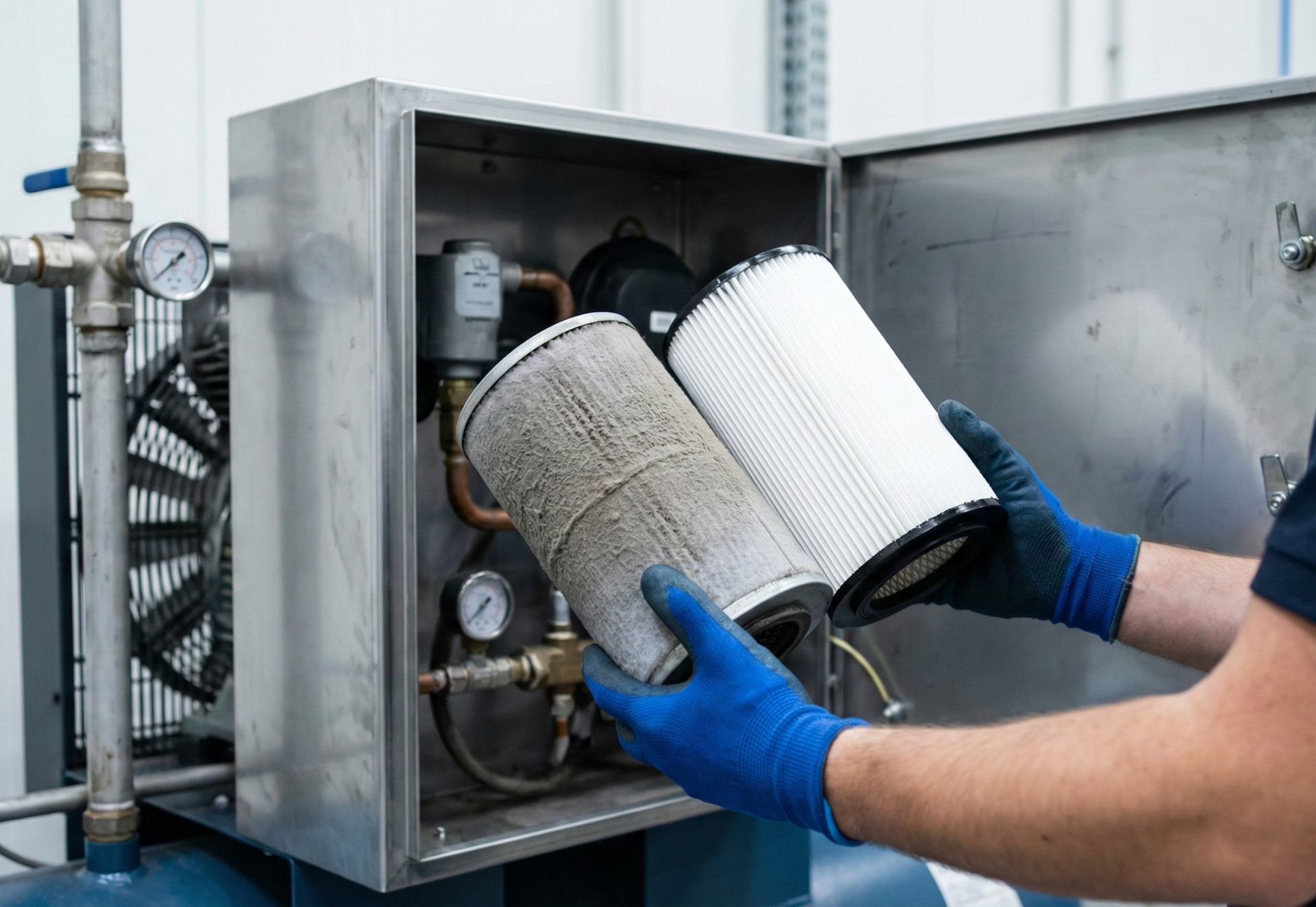
Air filters
A dirty air filter increases pressure drop, forcing the compressor to work harder for the same output. According to studies by CAGI (Compressed Air & Gas Institute), even small restrictions can significantly raise energy consumption.
Oil filters
Degraded oil circulates debris that accelerates wear on bearings, rotors, and internal components.
Separator elements
Worn separators cause oil carryover, reducing system efficiency and contaminating downstream tools.
Replacing these on schedule is one of the simplest, highest-ROI maintenance tasks.
2. Lubrication System Service
Lubricant condition directly affects efficiency, heat, and mechanical wear. Research from Machinery Lubrication Journal confirms that
80% of rotating equipment failures can be traced to lubrication issues.
Source: https://www.machinerylubrication.com
Service tasks include:
- Draining and refilling with manufacturer-approved oil
- Inspecting oil for contamination
- Replacing oil filters
- Checking for proper flow and temperature regulation
Lubrication is the foundation of compressor reliability; if it degrades, everything else follows.
3. Cooling System Inspection & Cleaning
Heat is the most damaging force inside an air compressor. Overheating leads to shutdowns, lubricant breakdown, and rotor or motor damage.
Cooling system service includes:
- Cleaning coolers (intercoolers and aftercoolers)
- Ensuring proper fan operation
- Checking coolant levels on applicable models
- Verifying discharge temperature stability
A stable cooling system prevents costly heat-related failures.
4. Belt, Coupling, and Drive System Inspection
Mechanical drive components must transmit power efficiently. If they slip, wear, or misalign, performance drops and vibration increases.
Service includes:
- Belt tension check
- Coupling alignment verification
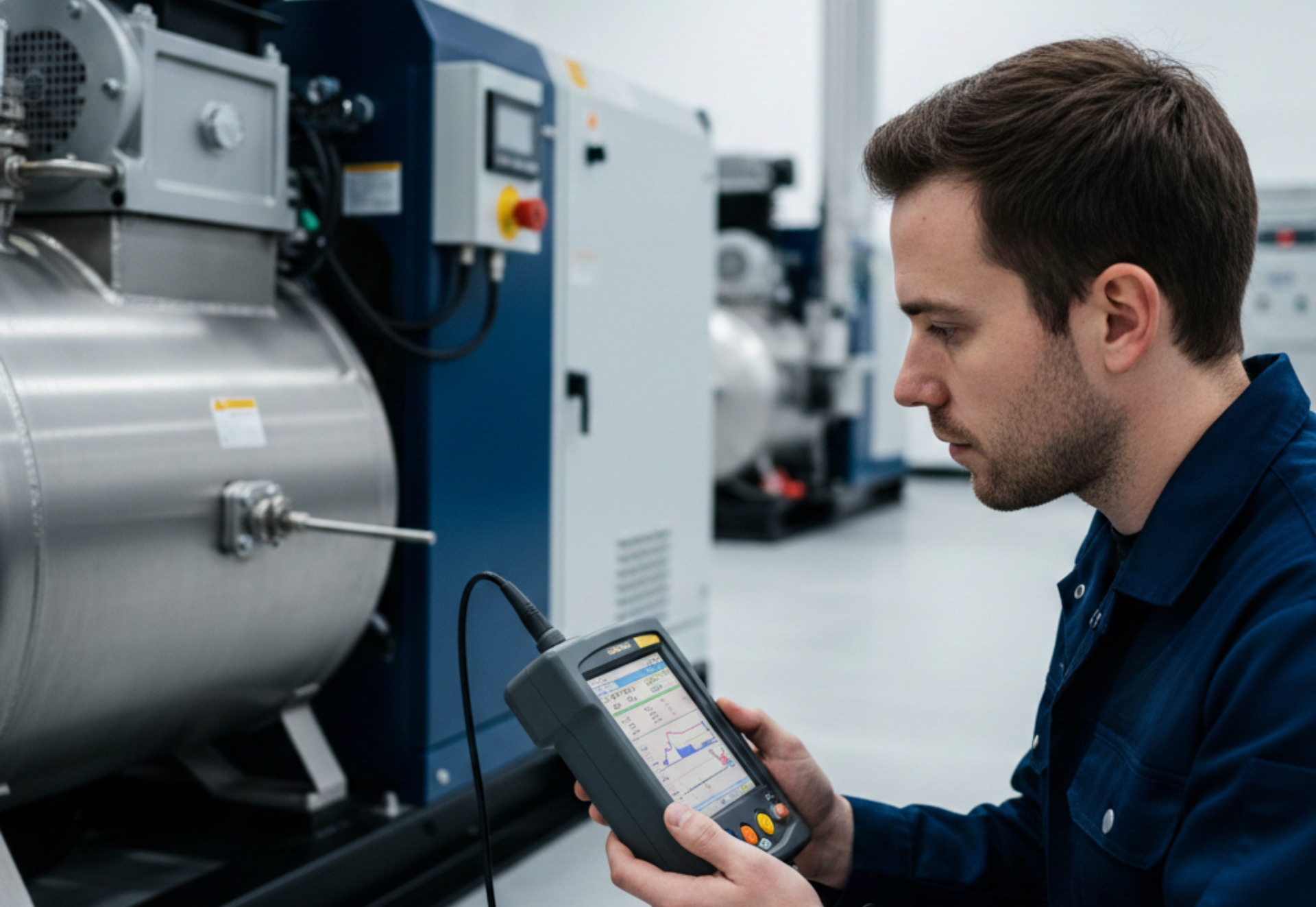
- Vibration analysis
- Checking for wear or cracking
Even minor misalignment can reduce compressor efficiency by several percent—and dramatically shorten bearing life.
5. Electrical & Control System Testing
Modern compressors depend on electronic controls for load/unload logic, temperature regulation, system safety, and performance monitoring.
Services include:
- Testing sensors and safety shutdowns
- Verifying pressure and temperature readings
- Inspecting starter contactors
- Checking VFD (Variable Frequency Drive) operation
- Resetting or recalibrating electronic controls
A compressor can be mechanically perfect but still fail due to a faulty sensor. Proper service eliminates that risk.
6. Leak Detection & System Integrity Inspection
Air leaks are the silent profit drain of industrial facilities. The DOE estimates that 20–30% of compressed air is lost to leaks in many plants.
Service teams locate leaks in:
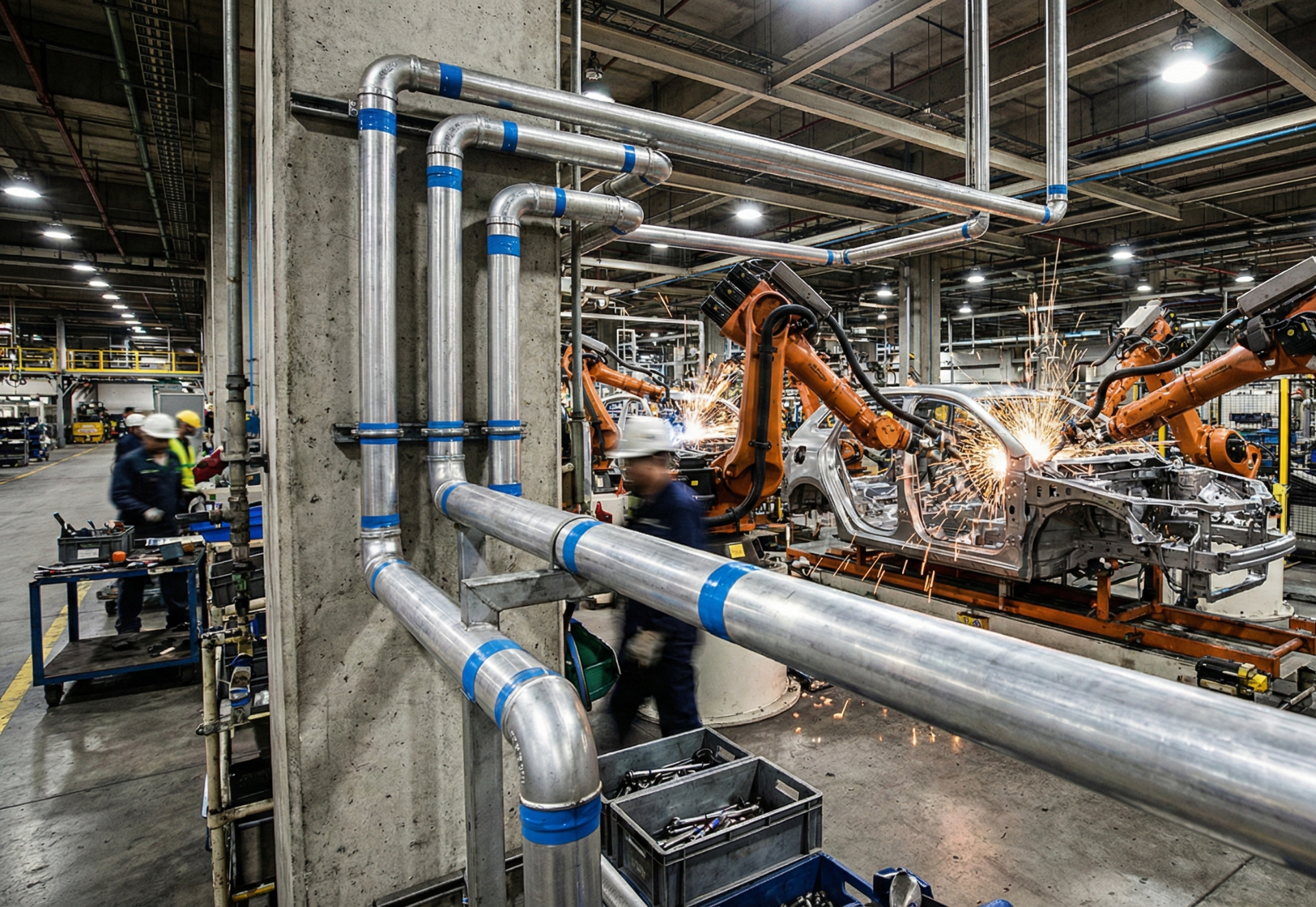
- Piping
- Fittings
- Quick connects
- Hose assemblies
- Valve bodies
Eliminating leaks reduces wasted energy and load time, extending compressor lifespan.
Section 2: How Preventive Service Minimizes Cost and Maximizes ROI
A compressor without maintenance will eventually:
✔ consume more energy
✔ produce less air
✔ fail unexpectedly
✔ cost more to repair over time
Facilities that follow a preventive maintenance schedule experience:
1. Lower Operating Costs
Regular filter and oil changes reduce pressure drop and maintain proper lubrication—directly reducing kilowatt usage.
2. Longer Equipment Lifespan
Service prevents metal-to-metal wear, overheating, and moisture contamination.
3. Reduced Downtime
Breakdowns become rare because failures are caught early.
4. Consistent Production Output
Stable pressure supports tool accuracy, process consistency, and overall quality.
5. Higher Safety & Compliance
Temperature, pressure, and safety mechanisms function predictably under proper maintenance.
In short, maintenance is cheaper than failure, and infinitely cheaper than downtime.
Section 3: Why Industrial Air Services’ Approach Outperforms Generic Service
Many providers simply “change filters and leave.” Industrial Air Services takes a more technical, engineering-driven approach.
✔ Root-Cause Diagnostics
We don’t just replace parts, we analyze why wear occurred, preventing recurrence.
✔ Factory-Trained Technicians
IAS techs understand compressors at the system level, not just the component level.
✔ Service Logs & Trend Tracking
Performance trends are monitored over time to catch early signals of decline.
✔ OEM-Compliant Service Methods
We follow industry best practices and manufacturer specifications for all major compressor brands.
✔ Recommendations That Improve Efficiency
From pipe sizing to storage optimization, we advise on steps that reduce energy waste and boost performance.
When IAS services your compressor, you’re not getting a maintenance visit; you’re getting an engineered reliability strategy.
Section 4: How Often Should a Compressor Be Serviced?
Service frequency depends on:
- Hours of operation
- Load profile (continuous vs. intermittent)
- Environmental conditions
- Compressor type (rotary screw vs piston)
- Air quality requirements
Most industrial environments follow:
- Quarterly preventive service
- Semi-annual deep component review
- Annual major service and performance audit
Facilities with 24/7 operations may require monthly checks to maintain system reliability.
Your compressor isn’t just equipment, it’s the heartbeat of your production line. Reliable service ensures you never have to choose between meeting demand and fighting downtime.
Protect your uptime. Reduce operating costs. Extend equipment life.
Partner with Industrial Air Services for engineered compressor service programs tailored to your facility.
Connect with IAS for reliability tips, engineering insights, and maintenance best practices.
Frequently Asked Questions (FAQs)
1. Can I do AC service myself?
Basic cleaning can be done in-house, but AC compressor service should never be handled without proper training. Industrial compressors involve high-pressure systems, electrical components, calibrated controls, and lubrication requirements that must meet OEM standards. Incorrect servicing can lead to:
- Reduced efficiency
- Premature component wear
- Safety hazards
- Costly downtime
Industrial Air Services provides professional, engineered maintenance that guarantees your system is serviced correctly and safely. If you want to protect uptime and avoid avoidable breakdowns, schedule your compressor service with IAS instead of taking the risk in-house.
2. Does an air compressor need maintenance?
Yes, routine maintenance is essential for every industrial air compressor. Without proper service, the machine becomes less efficient, runs hotter, consumes more energy, and faces a significantly higher risk of mechanical failure.
Maintenance ensures:
- Stable pressure output
- Proper lubrication
- Clean filtration
- Efficient cooling
- Reduced energy costs
- Maximum equipment lifespan
Industrial Air Services offers preventive service programs that keep your compressor running within design specifications. To maintain reliability and avoid costly breakdowns, partner with IAS for your scheduled maintenance needs.
3. What is the most common compressor failure?
One of the most common compressor failures is overheating, which is typically caused by poor cooling, clogged filters, low lubricant levels, or environmental stress. Overheating accelerates internal wear and often leads to system shutdowns or long-term damage.
The best way to prevent overheating is through consistent, expert maintenance, including cooler cleaning, lubrication checks, and system monitoring.
Industrial Air Services specializes in diagnosing and preventing heat-related failures through proven, engineering-level service practices. If your compressor is running hot or frequently shutting down,
contact IAS immediately for a reliability-focused inspection.